




































































Your cart is empty
Shop our productsPower outages are common in the United States, with disaster-prone regions experiencing blackouts for more than 24 hours. A report by the Department of Energy warned that two-thirds of homeowners were at risk of losing power in the summer of 2023.
These scenarios show the need for setting up power backup at home. Many buildings already have generators integrated into power systems powering lifts and common areas like staircases with lighting.
Even so, individual apartments are left in the dark hence the need to look for ways to keep their appliances running without interruption. If you live in an apartment, you’re probably thinking about buying a generator but wondering if it can be used in an apartment. And if so, which generator is best for apartments? Read on to find out.
Can You Use a Generator to Power Appliances in an Apartment?
You can power an apartment with a generator, but you must look for an indoor-friendly one. Most apartment leases prohibit occupants from using generators in their spaces, so if you must use one, look for a noise-free and emission-free generator.
This means you can’t use generators running on natural gas, diesel, or gasoline as they are loud and emit toxic fumes that harm the occupants and their neighbors. When looking for indoor-friendly generators, you have two options:
- Battery-powered generators or portable power stations
- Solar-powered or inverter generators
Solar-powered Generators
These generators are equipped with a new technology that helps them generate a more stable and efficient power supply.
As such, they make a better alternative for powering sensitive devices like televisions, laptops, and computers during a power outage. Since they’re quieter than traditional generators, they’re the best power backup solutions for apartments.
Battery-powered Generators
Battery-powered generators make an excellent alternative to traditional generators for residents looking for more portable backup solutions. They have compact designs that make them easy to move around and can power various appliances without connecting them to a power outlet.
Most battery-powered generators use lithium-ion batteries to power devices and can be charged from a carport, standard wall outlet, or solar panel. Since they come in different capacities and sizes, you must look for one that can power all your devices.
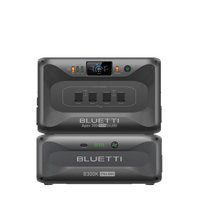
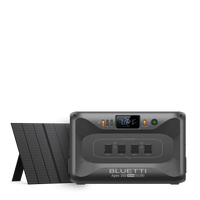
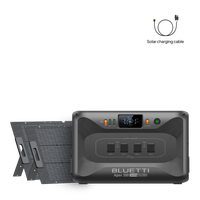
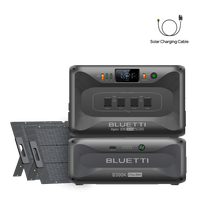
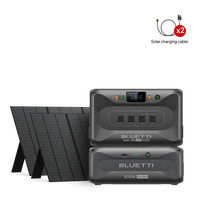
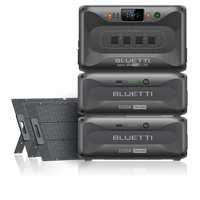
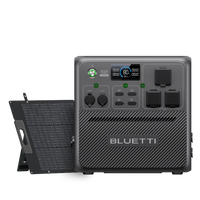
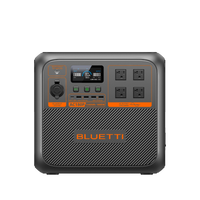
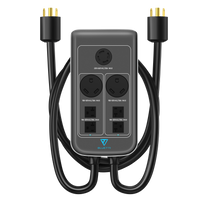
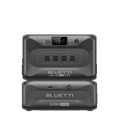
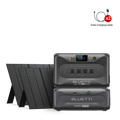
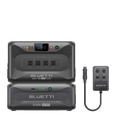
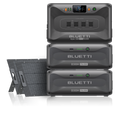
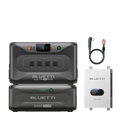
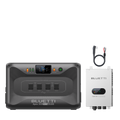
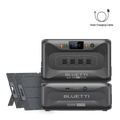
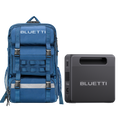
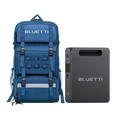
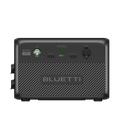
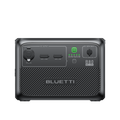
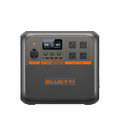
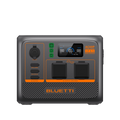
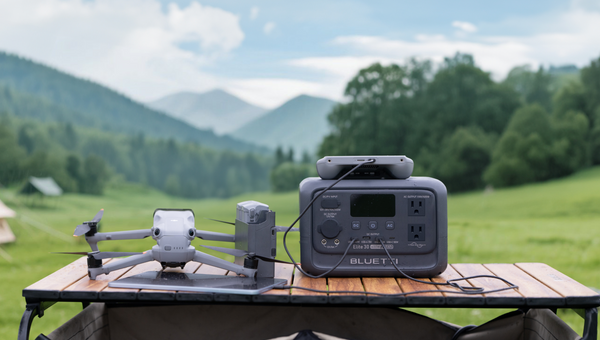
Portable power stations can power lights, smartphones, mini-refrigerators, laptops, medical equipment, and fans. The BLUETTI Apex 300 + 2*200W generator kit is an excellent example of a battery-powered generator.
It’s a high-end, versatile model in BLUETTI’s lineup, standing out with its massive power output and exceptional expandability. The BLUETTI Apex 300 delivers a base capacity of 2,764.8Wh (delivered through multiple AC and DC outlets), making it far more capable than entry-level units for extended use.
This means you can reliably power video equipment, cameras, smartphones, laptops, computers, and even heavier appliances during a power outage or off-grid scenario
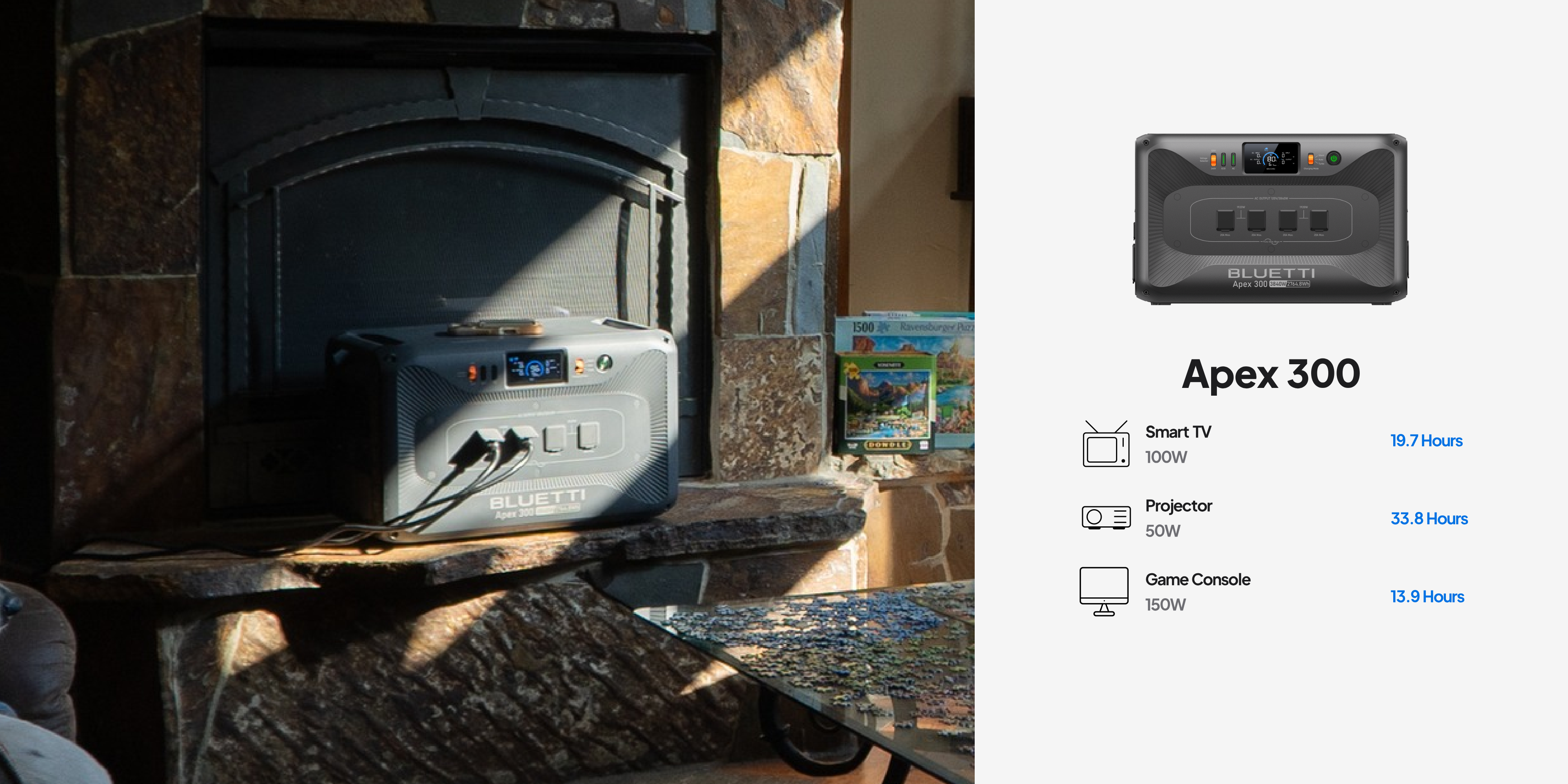
Another feature that makes this device impeccable is its ability to convert stored power into AC or DC output. This allows you to directly power all USB-related devices as well as standard household appliances, including those requiring 120V/240V split-phase for demanding loads like air conditioners, dryers, or tools.
And if you’re wondering how long it lasts, you shouldn’t worry. The unit uses premium LiFePO₄ batteries with far more charge cycles and a longer useful life. Unlike typical lithium-ion batteries limited to around 500 charge cycles, LiFePO₄ batteries in the Apex 300 offer 6,000+ charge cycles (to 80% original capacity, equivalent to roughly 17 years of daily use) for exceptional longevity and safety.
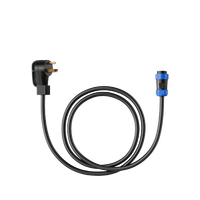
As for the power outlets, the Apex 300 is equipped with multiple AC outlets (including 4–6 depending on configuration, supporting up to 3,840W continuous output with 7,680W surge/lifting power), plus dedicated high-power options like NEMA TT-30R for RV camping, NEMA L14-50R or similar for heavy 240V appliances, and various DC ports (including 12V/24V outputs, USB-C up to 100W, and more via optional Hub D1 for additional USB/car ports). This versatility covers everything from mini-fridges and fans to power tools, medical devices, or even whole-home essentials when expanded.
As for its weight, the device weighs about 38kg (83.78 lbs) and features a robust, portable design (with dimensions around 525 × 327 × 320mm) suitable for home backup, RV use, or off-grid adventures—though it's built more for stationary reliability than ultra-light portability, with options for stacking expansions securely.
What Must You Consider When Buying Apartment-friendly Generators

As indoor-friendly generators become popular, more brands are entering the market, each promising to offer the best features. The availability of endless options can make it challenging to find what your apartment needs. Here are some features you must consider when buying one.
Capacity
You want a generator to power all your devices until power is restored. The best way to determine if the generator has the required capacity is to add all your devices’ watt-hours and compare it to its capacity.
An indoor generator with a capacity of 2000 Wh, for example, uses 2 watts per hour for 1000 hours, 200 watts for 10 hours, or 20 watts per hour for 100 hours.
If the phone's charger uses 30 watts and you want to charge it for the next 5 hours, it will probably use 30 watts x 5 hours = 150 Wh. You’ll have 1500 Wh remaining to power other devices compared to the generator's capacity.
The Apartment Size
Do you live in a small or spacious apartment? If so, how many appliances and devices need power? Such questions can help you determine the best generator to power your apartment.
Portability
You want a generator that’s easy to move from one place to another. A light, compact indoor generator with a design that supports mobility is an excellent pick. Oftentimes, indoor generators use large internal batteries, which add to their weight and make it cumbersome to carry.
A good rule of thumb is to look for generators weighing 30-60 pounds, as they’re easy to move and carry. However, if such generators prove challenging to carry, you could look for a smaller unit or pair two small generators for longer runtimes.
Ability to Integrate Other Power Sources
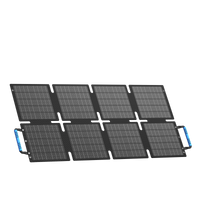
An indoor generator should be compatible with other power sources like solar systems. Since you’re using it during a power outage, you should be able to integrate it with solar panels other power sources to transform the generator into a renewable energy solution for your apartment.
Such a generator comes integrated with a solar charge controller to ensure there’s an even and continuous flow of electric current and protect the battery from damage. The uneven flow of electric current can compromise a battery’s life significantly.
Electricity Demand

You probably have a range of electronics in your apartments, and you want to keep them running even during a power outage. As such, you want an indoor generator that can power them without tripping.
It would help to check the maximum wattage of each appliance to determine the ideal capacity for an apartment-friendly generator. Suppose an apartment has high-power electronics like microwaves, induction stoves, or heaters that consume 1500-2000 watts; then a 3000+ watt indoor generator would suffice.
Ease of Installation
Installing electrical equipment can be challenging for many people. You want a device that has an easy plug-and-play design, so you don’t have to look for an expert to do it for you every time.
Outlet Setup

Ensure the generator supports both AC and DC power setups. The outlets should come in 12-24 V setups to power low- and high-voltage devices. Small electronics like smartphones and iPads can be powered through low-voltage outlets.
However, energy-intensive appliances like laptops, AC units, and televisions need high-voltage alternating currents (AC). And if you’ve more sensitive electronics like medical equipment and computers, ensure the generator is equipped with a pure sine wave inverter for safe charging.
Safety Features
Since you’re looking for an indoor generator, buying one with safety features is best. Look out for one with safety measures like low-oil, shut-off, overload protection, and automatic power down indicators.
Noise
Portable generators for apartments hardly produce noise. Even so, you want to check this feature if you share the space with others.
Safety Considerations When Using Generators in an Apartment
Although indoor generators provide a safer option than gas-powered ones, there are safety guidelines you must factor in when using them:
Avoid Exposure to Cold or Heat
The optimal operating temperature of a generator is -20 C to 60 C. When the generator is exposed to temperatures beyond this range, its performance is impeded severely.
Keep it Dry
Keeping the generator and its accessories dry; otherwise, the parts will short-circuit, explode, or fail.
Allow the Unit to Cool Before Charging
You want to allow the unit to cool before recharging it. Generators get extremely hot after powering devices for extended periods, which can prevent them from charging properly. You must allow it to cool to 22-28 C to avoid accidents.
Avoid Placing Heavy Objects on Top of the Device
It’s easy to place objects on top of the generator, especially in a small apartment. You could designate a special place for storage to keep it safe and supervise kids and people with disabilities when setting it up.
Avoid Disassembling the Unit
You may be tempted to disassemble the parts when cleaning or repairing the generator. It’s best to allow experts to do it to avoid leaks or explosions.
Regular Maintenance
The generator requires periodic maintenance to ensure it performs efficiently. As such, it’s best to look for a portable generator that’s easy to maintain.
Conclusion
Now you know that a generator can be used in an apartment and how to find a suitable one for your space. Remember to look for generators designed for indoor use and compatible with other power sources like solar. You’ll probably use the generator during a power outage hence the need to look for those supporting other power sources.
You Might Also Like:
| Florida solar incentives | What size generator to run a 2,000 sq ft house | Mini fridge wattage | Difference between generator and inverter | Is electricity cheaper at night | Best solar string lights | Whole home battery backup | Average electric bill in Florida | Average light bill for 1 bedroom apartment | What are rolling blackouts | Roof replacement with solar panels | Portable AC for camping | Best deals for gas and electric | Average home maintenance costs per state | How much do solar panels cost for a 2,500 sq ft house | Can you charge a lithium battery with an AGM charger | What size whole house generator do I need | Can you charge a lithium battery with an AGM charger | Average water bill in Albuquerque | 10kW off-grid solar system price|
Shop products from this article
Be the First to Know
You May Also Like
Cherokee Electric Cooperative: Bill Pay, Outage Map, and Customer Service Guide
Cherokee Electric Cooperative: Bill Pay, Outage Map, and Customer Service Guide
Cherokee Electric Coop is a local electric cooperative that provides reliable energy services to its members. This article provides important information about this cooperative, such as how to pay your...
20/10/2025
Central Florida Electric Cooperative: Pay Bill | Outage Map | Customer Service | Phone Number

Central Florida Electric Cooperative: Pay Bill | Outage Map | Customer Service | Phone Number
This article will discuss the services offered by Central Florida Electric Cooperative and provide customers with important information about how to pay their bills, check outages maps, get customer service,...
21/10/2025
BVU Authority: Pay Bill | Check Outage Map | Customer Service | Phone Number
BVU Authority: Pay Bill | Check Outage Map | Customer Service | Phone Number
This article is all about providing readers with vital information about Bvu Authority, one of the leading utilities providers in the United States. We will cover topics such as how...
21/10/2025
Table of Article


