










































































Your cart is empty
Shop our productsSolar panels produce little to no energy from sunset to sunrise, and their output varies with the intensity of sunlight throughout the day. If you plan to build a solar system, it is essential to understand peak sun hours (PSH) and how to calculate them for your location in 2026.
In this post, you'll learn what PSH really means, how they differ across different US regions, and how they affect solar panel performance and battery charging. You will also learn how to find the PSH of your location. At the end, you will be able to approximate your solar energy production and select the appropriate system.

What Exactly Is a "Peak Sun Hour," and Why Isn't It Just Daylight?
One of the most popular misconceptions regarding solar power is that a panel works to its full power from sunrise until sunset. In reality, the industry uses peak sun hours (PSH) to estimate energy production. Here are peak sun hours explained:
A PSH isn't just an hour of daylight. It is the equivalent time when the sun delivers an average energy intensity of one thousand watts per square meter (1,000 W/m²). This is the intensity at which panels are tested under Standard Test Conditions (STC). When the sun is rising or setting, its power is low, whereas at midday it is strongest.
On average, many regions receive only 4-6 PSH per day, even though daylight lasts much longer. This varies by location and season. For example, a 400 W solar panel at 500 W/m² (50% of STC) produces about 200 W. At 5 PSH per day, the panel will produce about 2,000 watt-hours (2 kWh) of energy. This is why solar energy production is calculated using PSH.
Energy (Wh)=Power Rating (W)×PSH (h)
400 W×5 h = 2,000 Wh = 2 kWh

Why Should You Care About PSH When Choosing a Portable Power Station?
Understanding PSH is crucial for using solar power effectively with a portable power station, whether for adventures or home backup. It ensures you can recharge your unit in a reasonable time.
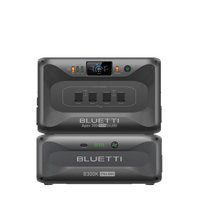
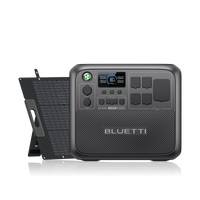
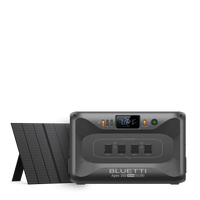
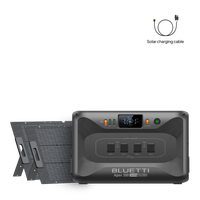
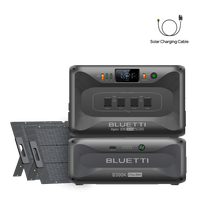
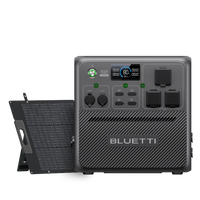
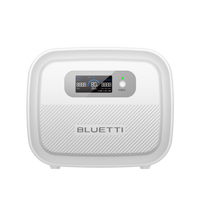
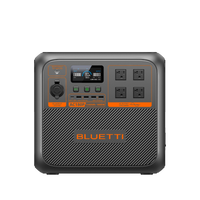
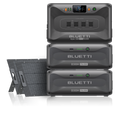
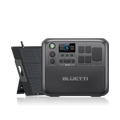
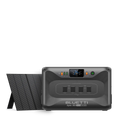
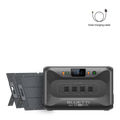
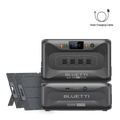
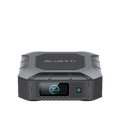
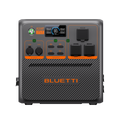
Panels generate their rated wattage primarily during PSH. Therefore, the number of PSH in your area determines how much solar panel capacity you need. For instance, the BLUETTI Apex 300 has a battery capacity of 2,764.8 Wh. In ideal conditions with 5 PSH, you would need roughly 553 W of solar input to fully charge it in one day (2,764.8 ÷ 5 ≈ 553 W). In real-world conditions, account for 15–20% system losses, so a larger array is recommended.
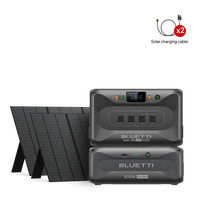
A single 200 W panel alone won't suffice in most cases. Three 200 W panels (600 W total) provide a practical buffer. High-capacity batteries help store this energy, capturing what you collect during peak hours for use anytime.
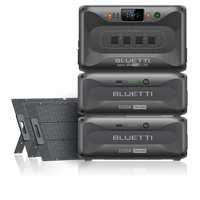
During the brightest days, you can fully charge the Apex 300 with solar input in about 80 minutes (or an expanded system up to 30 kW input with the SolarX 4K controller in roughly 1.6–1.9 hours). That stored energy can then power your entire residence at night, turning variable sunlight into reliable 24/7 energy.
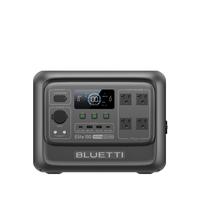
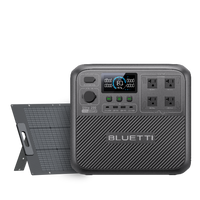
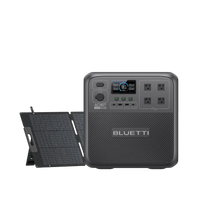
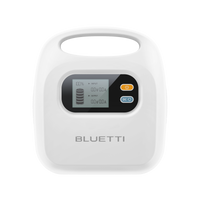
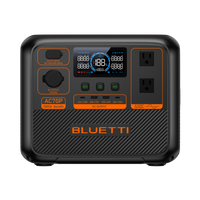
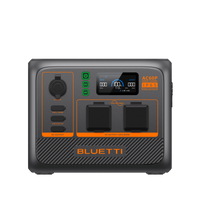
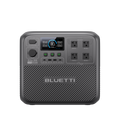
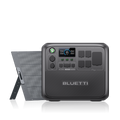
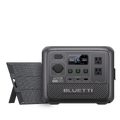
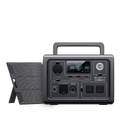
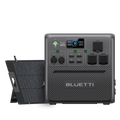
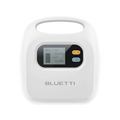
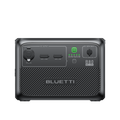
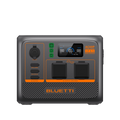
The BLUETTI Elite 200 V2, with its 2,073.6 Wh battery and 2,600 W output, can be fully recharged with appropriately sized solar panels in about 2.4 hours under good conditions. Its portability makes it ideal for camping or travel—you can capture energy in sunny areas like Arizona and use it later in cloudier regions like the Pacific Northwest.

How Many Peak Sun Hours Does Your State Receive? (2026 Data)
While PSH helps you understand panel performance, actual sunlight varies widely across the U.S. Knowing your state's solar resources lets you design a system that meets your energy needs.
The continental U.S. has three broad solar zones based on average annual sunlight reaching the ground:
-
Sun Belt (6+ PSH): Arizona, New Mexico, and Nevada often exceed 6 PSH per day in the desert Southwest.
-
Moderate Zone (4.5–5.5 PSH): States such as Texas, Florida, and North Carolina perform well in summer but require more planning in winter.
-
Low-Sun Regions (Less than 4 PSH): The Pacific Northwest, Great Lakes, and Alaska typically receive fewer than 4 PSH due to cloud cover and lower sun angles.
To illustrate how PSH varies, here's a comparison of average daily peak sun hours for three different U.S. cities:
|
City |
State |
Estimated Avg. Daily PSH |
Solar Potential Category |
Recommended Solar Array Size (for ~2 kWh daily use) |
|
Phoenix |
Arizona |
~6.5 |
Sun Belt |
~385 W |
|
Chicago |
Illinois |
~4.0 |
Low-Sun Region |
~625 W |
|
Seattle |
Washington |
~3.5 |
Low-Sun Region |
~715 W |
A solar panel in Phoenix produces nearly twice the energy of one in Seattle. This means someone in Chicago or Seattle generally needs a larger solar array to achieve the same daily output as in Phoenix.

What Factors Will Impact Your Real-World Solar Harvest?
Even with PSH maps, the actual energy your portable power station gets can vary a lot. Knowing the factors that affect sunlight helps set realistic expectations and make small adjustments to get the most energy, since the map numbers are just a starting point:
How Do Your Latitude and Season Change the Math?
The biggest factors affecting solar energy are your location and the time of year. PSH values represent a typical annual average. However, the sun is not uniform across the seasons, and there are the latitude and seasonal variables as well:
Latitude Effect
The nearer you are to the equator, the stronger the rays of the sun and the more intense the PSH. As an illustration, the southern Texas area has more solar potential than northern Maine.
Seasonal Swing
Monthly PSH may be quite extreme. December in Austin, Texas, has an average of 2.73 PSH/day, whereas July has already increased to about 6.77 PSH/day. Therefore, a solar panel in Austin will yield over two times the energy in July than in December.
Does Your Roof Orientation and Tilt Really Matter?
Yes, roof orientation and tilt really matter. Even in sunny states like Arizona, panels pointed the wrong way or lying flat can lose 20–40% of their energy, turning a "Sun Belt" location into a "Low-Sun" one. Here's how the slope and the inclination of your roof panels can influence the amount of solar input they're getting:
Direction (Azimuth Angle)
In the Northern Hemisphere, panels are recommended to face the True South in order to maximize the PSH. East-facing roofs receive a lot of morning sun yet are denied midday sun, whereas west-facing roofs receive afternoon sun yet are denied morning peak.
Tilt
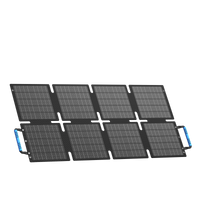
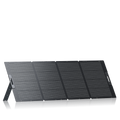
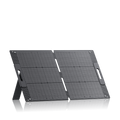
Portable solar panels can be adjusted to incline towards the sun. Summer requires less of a tilt and winter more of a steep one. The BLUETTI portable panels have adjustable kickstands between 35° and 55°, which allow additional energy collection throughout the year. As an example, in Austin, you can slant panels steeper in December when you want low winter sun and horizontally in July when you want high noon sun. This is unlike fixed rooftop panels that are stuck at one angle.

How to Calculate Peak Sun Hours for Your Specific Setup?
Now that you understand PSH and how it varies by location, you can apply it to design your system. Follow these steps:
Find Your Location's PSH
Before calculating your system, you need solar data for your exact location. Then, you can convert it to PSH. Here's how:
Step 1: Obtaining Solar Irradiance Data.
Determine the amount of daily sun energy in your location, measured in kWh/m². Use free tools like the NREL PVWatts calculator (for the U.S.) or the Global Solar Atlas (worldwide) to get daily solar irradiance data.
Step 2: Convert to Peak Sun Hours
Divide the daily solar energy by 1 kWh/m² (since 1 PSH = 1,000 W/m² = 1 kWh/m²).
Example: If your location receives 5.6 kWh/m²/day, then PSH = 5.6 ÷ 1 = 5.6 Peak Sun Hours.
Size Your Solar Array
Account for ~20% system losses (heat, wiring, inverter efficiency). The practical formula is:
Required Solar Array (W) = Daily Energy Needed (Wh) ÷ (PSH × 0.8)
Example with the BLUETTI Elite 200 V2 (2,073.6 Wh battery) in a 4-PSH location:
Required Solar Size = 2,073.6 ÷ (4 × 0.8) = 2,073.6 ÷ 3.2 ≈ 648 W
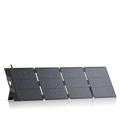
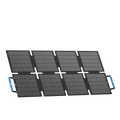
Two 350 W BLUETTI panels (700 W total) provide a useful buffer for clouds or higher usage.
How to Optimize Your Solar Power Harvest in Low-PSH Areas?
Living in an area with fewer than 4 PSH doesn't rule out effective solar power—it simply requires a smarter approach. The classic strategy is over-paneling (adding extra solar capacity) combined with larger battery storage to capture more energy during limited sunlight hours.
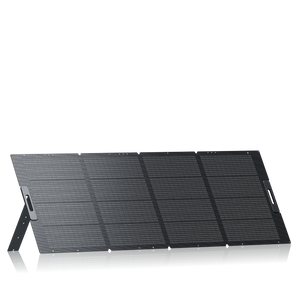
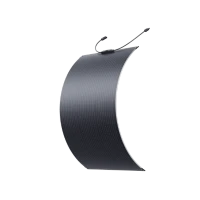
Over-paneling allows you to maximize collection even on cloudy or low-light days. BLUETTI's high-efficiency 350 W panels with monocrystalline cells perform well in variable conditions.
Use a Power Station
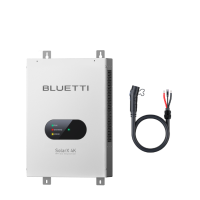
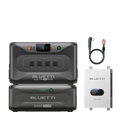
In short collection windows, you need fast input capability. The BLUETTI Apex 300 supports up to 2,400 W solar input natively and up to 4,000 W with the SolarX 4K controller. This enables quick charging of its 2,764.8 Wh battery even in places like Washington with only 3.5 PSH.
How Can Portable Power Stations Solve the "Cloudy Day" Problem?
Even with a strong solar setup, extended low-light periods happen. A modern portable power station bridges the gap between scarce sunlight and your power needs:
-
Perfect Backup with 0ms UPS: The Apex 300 offers true zero-millisecond switchover, keeping critical devices like medical equipment or routers running without interruption.
-
Mobile Backup with Charger 2 Alternator: For RV or van life, the BLUETTI Charger 2 can combine up to 800 W from your vehicle's alternator with 600 W from solar for fast hybrid charging—far quicker than a standard 12V port.

Frequently Asked Questions (FAQs)
-
Can I charge my BLUETTI station on cloudy days?
Yes, solar panels still produce power on cloudy days, though at reduced output (often 10–30% of full sun depending on cloud density).
-
What is the best time of day for solar charging?
Midday (roughly 10 AM to 2 PM, or 11 AM to 3 PM during daylight saving time) delivers the strongest sunlight. Charging is possible outside this window, but output drops significantly in early morning or late afternoon.
-
Do I need a professional to calculate this?
No, for portable or backup setups with BLUETTI products, you can do it yourself. Use a tool like the Global Solar Atlas to find your average PSH, then apply the formula:
Required Solar (W) = Daily Needs (Wh) / (PSH × 0.8)
This helps you choose the right number of 200 W or 350 W panels.
Conclusion
Now you understand what peak sun hours are and how to calculate them for your location in 2026. PSH is key because it reveals how much energy your solar panels can realistically generate, accounting for sunlight intensity, direction, season, roof angle (or panel tilt), and weather conditions.
By sizing your solar array accordingly, you can meet your energy needs for home backup or portable use. The BLUETTI portable power stations, such as the Apex 300 and Elite 200 V2, offer multiple charging options, UPS protection, and large-capacity batteries that store energy captured during peak hours for use at night, during cloudy periods, or blackouts. BLUETTI solar panels can be adjusted for maximum sunlight, while the quick-charging alternator option replenishes stations faster than a standard vehicle charger.
Shop products from this article
Be the First to Know
You May Also Like
How to Transition to Solar Backup Power in 2026 (Earth Day Guide)


How to Transition to Solar Backup Power in 2026 (Earth Day Guide)
01/04/2026
20-Amp Outlet vs. 15-Amp Outlet: Choosing the Right Power for Your Home


20-Amp Outlet vs. 15-Amp Outlet: Choosing the Right Power for Your Home
24/03/2026
Depth of Discharge Explained: A Practical Guide to Battery Performance and Longevity


Depth of Discharge Explained: A Practical Guide to Battery Performance and Longevity
24/03/2026
Table of Article


