
3 KW Solar Panel Produces How Many Units?Let'S Find Out!

Solar energy has become increasingly popular as a renewable and sustainable source of electricity. With the rise in demand for solar panel installations, many homeowners and businesses are looking for ways to calculate the potential energy output of their solar panels. One common question that often arises is how many units can a 3 kW solar panel produce? In this article, we will dive into the details and answer this question to help users better understand the potential energy production of a 3 kW solar panel. Understanding this information is crucial for anyone considering investing in solar energy, as it can help determine the feasibility and effectiveness of a solar panel system. So, let's find out just how many units a 3 kW solar panel can produce.


BLUETTI Elite 200 V2 Portable Power Station | 2,600W 2,073.6Wh
- 2600W | 2073.6Wh | LiFePO₄
- 15ms UPS Response Time
- 6,000+ Life Cycles to 80% Capacity
- MPPT Controller, BMS, and More
- Ideal for Home Backup and Outdoor Adventures
A 3000-watt solar panel that receives an average of 5 hours of direct sunlight per day
Solar panels are becoming increasingly popular as a source of renewable energy. They utilize the power of the sun to generate electricity, making them an environmentally friendly way to supplement your energy needs. The actual electricity generated by solar panels depends on factors such as rated power, peak sun hours, panel efficiency, orientation, shading, and weather conditions. In this article, we will explore the estimated daily output of a 3,000-watt solar panel system receiving an average of 5 peak sun hours per day.
Before we dive into the calculations, it is important to have a basic understanding of how solar panels work. Solar panels are made up of photovoltaic (PV) cells that convert sunlight into electricity. The size and efficiency of these cells determine the overall output of a solar panel. The most common measure of solar panel output is in watts (W).
Now, let's calculate the daily output of a 3000-watt solar panel. The first factor we need to consider is the number of hours of direct sunlight that the panel receives per day. Direct sunlight refers to the light that reaches the panel without being interrupted by any obstacles like clouds or trees. On average, a solar panel receives around 5 hours of direct sunlight per day.
The second factor we need to consider is the efficiency of the solar panel. The efficiency of a solar panel is the percentage of sunlight that it can convert into electricity. Most solar panels have an efficiency range of 15% to 20%. For our calculation, we will use a conservative efficiency of 10%.
Now, let's plug these numbers into the formula:
Daily Output (kWh) = Wattage (W) x Hours of Sunlight x EfficiencyWe know the wattage of our solar panel is 3000 W. So, the calculation would be:
Daily Output (kWh) = 3000 W x 5 hours x 0.1 (10% efficiency) = 15 kWh
This means that our 3000-watt solar panel, receiving an average of 5 hours of direct sunlight per day, can produce 15 kilowatt-hours (kWh) of electricity daily. To put this into perspective, the average household in the US consumes around 27 kWh of electricity per day. It is important to note that this output can vary depending on factors such as location, weather conditions, and the angle at which the panel is installed.
Another important factor to consider when installing a solar panel is net metering. Net metering is a billing mechanism that allows homeowners to sell back any excess electricity produced by their solar panels to the grid. This means that on days when the solar panel produces more electricity than the household consumes, the excess electricity can be credited for use on days when the panel does not produce enough. This further reduces the overall cost of electricity for homeowners.
a 3000-watt solar panel receiving an average of 5 hours of direct sunlight per day can produce 15 kWh of electricity daily. Investing in a solar panel can not only help reduce your carbon footprint but also save you money in the long run. With advancements in technology, solar panels are becoming more efficient and cost-effective, making it a viable option for homeowners to switch to renewable energy.
Average Daily Production
| City | 1 kW System | 1.5 kW System | 2.0 kW System | 3.0 kW System | 4.0 kW System |
|---|---|---|---|---|---|
| Adelaide | 4.2 kWh | 6.3 kWh | 8.4 kWh | 12.6 kWh | 16.8 kWh |
| Alice Springs | 5.0 kWh | 7.5 kWh | 10.0 kWh | 15.0 kWh | 20.0 kWh |
| Brisbane | 4.2 kWh | 6.3 kWh | 8.4 kWh | 12.6 kWh | 16.8 kWh |
| Cairns | 4.2 kWh | 6.3 kWh | 8.4 kWh | 12.6 kWh | 16.8 kWh |
| Canberra | 4.3 kWh | 6.45 kWh | 8.6 kWh | 12.9 kWh | 17.2 kWh |
| Darwin | 4.4 kWh | 6.6 kWh | 8.8 kWh | 13.2 kWh | 17.6 kWh |
| Hobart | 3.5 kWh | 5.25 kWh | 7.0 kWh | 10.5 kWh | 14.0 kWh |
| Melbourne | 3.6 kWh | 5.4 kWh | 7.2 kWh | 10.8 kWh | 14.4 kWh |
| Perth | 4.4 kWh | 6.6 kWh | 8.8 kWh | 13.2 kWh | 17.6 kWh |
| Sydney | 3.9 kWh | 5.85 kWh | 7.8 kWh | 11.7 kWh | 15.6 kWh |
Important Factors to consider when calculating solar panel output:
1. Location
The location of your property plays a crucial role in determining the output of your solar panel system. The amount of sunlight that your panels receive depends on factors such as latitude, climate, and local weather patterns. For instance, areas with a high latitude or frequent cloudy weather will receive less sunlight, resulting in lower output from the solar panels.
2. Panel Efficiency
The efficiency of a solar panel refers to its ability to convert sunlight into electricity. The higher the efficiency, the more output you can expect from your panels. The efficiency of a solar panel depends on various factors such as its material, design, and size. It is essential to invest in high-quality panels with higher efficiency to ensure maximum output.
3. Panel Orientation
The orientation of your solar panels also affects their output. Ideally, panels should be installed facing south in the northern hemisphere and facing north in the southern hemisphere to receive the maximum amount of sunlight throughout the day. Deviating from these orientations may lead to a decrease in output.
4. Shading
Shading is another critical factor that affects the output of a solar panel system. Even a small amount of shading on one panel can significantly reduce the overall output of the system. It is crucial to avoid shading from nearby trees, buildings, or other obstructions when installing solar panels.
5. Temperature
The temperature of the panels also affects their efficiency. Higher temperatures may cause the panels to produce less electricity. However, modern solar panel technology has improved to minimize the impact of high temperatures on their output.
6. Time of Year
The time of year can also affect the output of solar panels. In the summer, the days are longer, and the sun is higher in the sky, resulting in more sunlight for the panels to convert into electricity. On the other hand, shorter winter days and lower sun angles may lead to lower output.
7. Inverter Efficiency
The inverter is a crucial component of a solar panel system as it converts the direct current (DC) produced by the panels into alternating current (AC) that can be used to power your home. The efficiency of the inverter also affects the overall output of the system. It is essential to invest in a high-quality inverter with a high efficiency rating to ensure maximum output.
8. System Maintenance
Regular maintenance of your solar panel system is crucial to ensure optimum output. Dust, debris, and other factors can impact the efficiency of the panels. It is essential to keep them clean and well-maintained to ensure they are functioning at their highest capacity.
Choosing a High-Efficiency Solar Panel
Beyond these environmental and system factors, choosing an efficient solar panel can help you make better use of the available sunlight. The BLUETTI PV350D Solar Panel provides 350W rated power with up to 23.4% conversion efficiency, making it suitable for portable solar charging, camping, RV trips, and off-grid power setups.
For the best real-world solar output, place the panel where it receives direct sunlight with minimal shading and adjust its position as sunlight conditions change. Actual solar generation will vary with location, weather, temperature, panel angle, and other environmental conditions.
How to Calculate Solar Power Output?
Step 1: Determine the Total Solar Panel Area
The first step in calculating the solar panel output is to determine the total area of the solar panels. This can be done by measuring the length and width of each solar panel and multiplying them to get the total area in square meters (m2).
For example, let's say we have 10 solar panels with dimensions of 1.5m x 1m each.
Total area of solar panels = 10 panels x (1.5m x 1m) = 15m2
Step 2: Determine the Solar Panel Efficiency
The efficiency of a solar panel refers to the amount of sunlight it can convert into electricity. It is represented as a percentage and can range from 15% to 22%. You can find the efficiency rating of your solar panels on the manufacturer's website or on the product manual.
For this example, let's assume the efficiency of our solar panels is 18%.
Step 3: Calculate the Annual Average Solar Radiation
The amount of sunlight, or solar radiation, that reaches the earth's surface varies depending on location and weather patterns. This is measured in kilowatt-hours per square meter (kWh/m2). You can find the annual average solar radiation for your location by using online tools or consulting with a solar installer.
Let's assume the annual average solar radiation for our location is 5.5 kWh/m2.
Step 4: Determine the Performance Ratio (PR)
The performance ratio takes into account any losses in the solar panel system such as shading, temperature, and wiring. It is typically a number between 0.5 and 0.9, with 0.75 being the default value.
For our example, we will use a performance ratio of 0.75.
Step 5: Plug Numbers into the Formula
Now that we have all the necessary information, we can plug it into the formula given at the beginning of this article.
E = A * r * H * PR
Substituting the values from our example, we get:
E = 15m2 * 18% * 5.5 kWh/m2 * 0.75 = 14.85 kWh
This means that our 10 solar panels with an efficiency of 18% can produce approximately 14.85 kWh of electricity per day.
Step 6: Calculate the Annual Solar Power Output
To determine the annual solar power output, we need to multiply the daily output by 365 days.
Annual solar power output = 14.85 kWh * 365 = 5415.25 kWh
This means that our 10 solar panels can produce approximately 5415.25 kWh of electricity per year.
the number of units produced by a 3 kW solar panel will depend on factors such as the efficiency of the panel, location, and weather conditions. By using the formula and following the steps outlined above, you can calculate the approximate output of your solar panel system. Keep in mind that this is an estimate and the actual output may vary. It is always recommended to consult with a professional solar installer to get a more accurate calculation for your specific system.
Monthly Units Consumption (kWh) vs Typical System Needed (kW)
| Monthly Units Consumption (kWh) | Typical System Needed (kW) |
|---|---|
| 300-400 | 3.2kW |
| 600-700 | 5kW |
| 1200-1400 | 10kW |
| 1800-2100 | 15kW |
| 2400-2700 | 20kW |
The amount of energy produced by a solar panel depends on its size and efficiency. A standard 3 kW solar panel system is capable of producing approximately 300-400 units of electricity per month. This means that if a household consumes an average of 300-400 units of electricity per month, a 3 kW solar panel system would be an ideal option to meet their energy needs. However, as the monthly units consumption increases, a larger solar panel system would be required.
According to the table above, a 5 kW solar panel system would be suitable for homes that consume 600-700 units of electricity per month. This system would be able to produce enough energy to meet the household's energy needs without relying on the grid. Similarly, a 10 kW solar panel system would be a good choice for homes that consume 1200-1400 units of electricity per month. This system would produce enough energy to cover the household's energy consumption, and even have surplus energy that can be sold back to the grid.
For larger households or commercial buildings that consume 1800-2100 units of electricity per month, a 15 kW solar panel system would be recommended. This system would not only meet the energy needs of the household but also provide additional energy that can be used for other purposes. Lastly, for buildings that consume 2400-2700 units of electricity per month, a 20 kW solar panel system would be the ideal choice. This system would produce enough energy to cover the high energy consumption of the building and can also be used for commercial purposes such as selling excess energy back to the grid.
a 3 kW solar panel system can produce approximately 300-400 units of electricity per month, and the units produced increase as the system size increases. It is important to select the right size of the solar panel system based on your energy needs to maximize its efficiency and cost-effectiveness. So, before installing a 3 kW solar panel system, it is essential to assess your monthly units consumption and determine whether this system would be suitable for your energy needs.
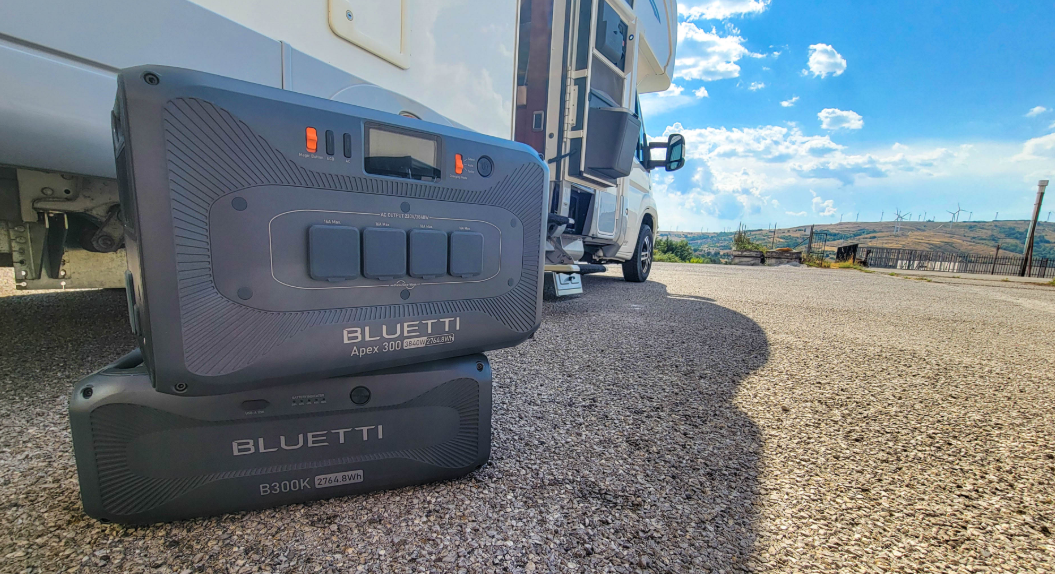
BLUETTI Apex 300 Home Battery Backup: Reliable Power for Home Outages
Power outages can interrupt everything from refrigeration and lighting to internet access and everyday household appliances. The BLUETTI Apex 300 Home Battery Backup provides a modular energy storage solution designed to keep essential devices powered when grid electricity is unavailable.
The Apex 300 starts with 2,764.8Wh of built-in battery capacity and delivers 3,840W AC output, giving it enough output to support a wide range of compatible household appliances. Depending on your backup requirements, additional battery storage can be added to extend runtime during longer outages.
For households with higher energy demands, the modular design allows the system to scale beyond a single power station. This gives homeowners more flexibility to build a backup system around their actual appliance loads, desired runtime, and future energy needs rather than relying on a fixed-capacity solution.
Another important advantage for home backup is its 0ms UPS functionality. When used in a compatible setup, the Apex 300 can help maintain power to essential connected devices during unexpected grid interruptions.
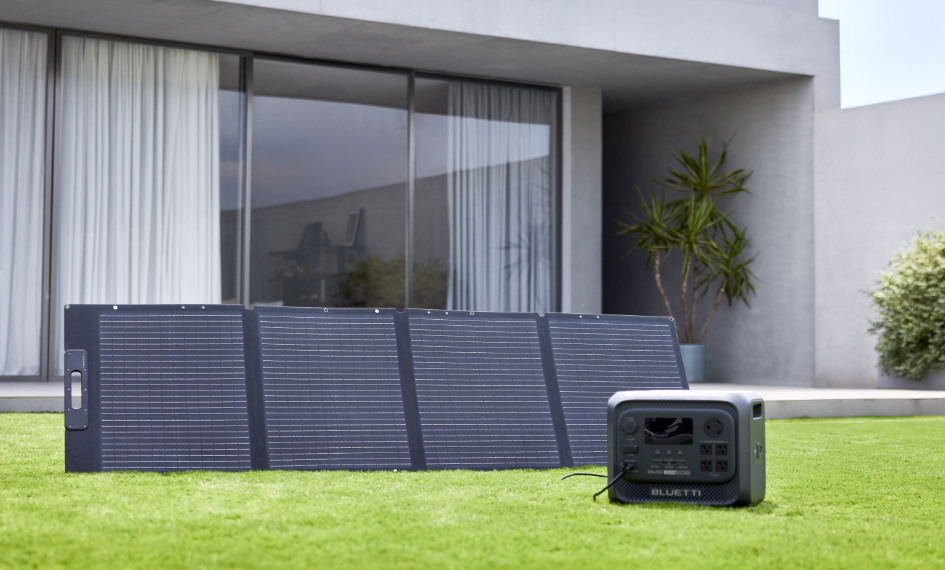
The Apex 300 also supports solar charging, allowing compatible solar panels to replenish stored energy when sufficient sunlight is available. This can be particularly useful during extended outages or for households looking to incorporate renewable energy into their backup power setup.
With app-based monitoring and control, users can keep track of system status and manage their stored power more conveniently. Its LiFePO4 battery chemistry is also designed for long-term energy storage use.
For everyday outage preparedness, a single Apex 300 can provide portable backup power for selected household essentials. For larger home backup requirements, the system can be expanded with additional battery capacity and configured according to the home's power needs.
Overall, the BLUETTI Apex 300 is a flexible option for homeowners who want backup power without relying solely on a traditional fuel generator. Its combination of 3,840W output, 2,764.8Wh built-in capacity, expandable storage, solar charging, and 0ms UPS makes it suitable for both short-term outages and larger modular home backup setups.


Apex 300 Versatile Power Station | 3,840W, 2,764.8Wh
- Smartest 120V/240V Portable Power
- 3,840W | 2,764.8Wh | LiFePO₄
- 0ms UPS Response Time
- 6,000+ Life Cycles to 80% Capacity
- Dual Voltage Output & Expandable Storage
- Ideal for Smart Home Energy Management
1. How does the location and weather impact the production of a 3 kW solar panel?
The location and weather have a significant impact on the production of a 3 kW solar panel. The amount of sunlight and temperature can greatly affect the efficiency of the solar panel, ultimately determining how many units it can produce.
Firstly, the location plays a crucial role in determining the production of a solar panel. The intensity of sunlight varies depending on the geographical location. Areas closer to the equator receive more sunlight and have a higher potential for solar energy production compared to those in higher latitudes. Furthermore, the angle and direction of the solar panel also need to be considered to maximize sunlight absorption.
In addition to location, weather conditions also impact the production of a 3 kW solar panel. Cloud coverage, humidity, and temperature can affect the amount of sunlight reaching the solar panel. For instance, cloudy or rainy days can significantly decrease the solar panel's efficiency, resulting in lower unit production. On the other hand, cold temperatures can improve the solar panel's performance, as solar panels are more efficient in colder temperatures.
the location and weather conditions are crucial factors that affect the production of a 3 kW solar panel. Therefore, it is essential to consider these factors when installing a solar panel to ensure maximum energy production and efficiency. As technology continues to advance, solar panels are becoming more adaptable to various weather conditions, making them a reliable source of renewable energy.
2. What are the maintenance requirements for a 3 kW solar panel and how do they affect its production output?
The maintenance requirements for a 3 kW solar panel vary depending on the type of panel and its location. However, in general, regular cleaning and inspection of the panels is necessary to ensure optimal production output. This includes removing any debris or buildup that may be blocking sunlight from reaching the panels. In addition, routine checks for any damaged or malfunctioning components should be done to prevent any decrease in production. Other factors that can affect the maintenance requirements include weather conditions, such as heavy snow or hail, which may cause damage to the panels. proper maintenance is crucial in maintaining the efficiency and longevity of a 3 kW solar panel system.
3. Is the production of a 3 kW solar panel consistent throughout the year or does it vary?
The production of a 3 kW solar panel is dependent on several factors, such as location, weather conditions, and panel efficiency. These factors can affect the consistency of production throughout the year. In some regions, solar panels may produce more energy during the summer months due to longer days and more sunlight. However, in other regions with more cloudy or overcast weather, production may be more consistent throughout the year. Additionally, panel efficiency can also impact the consistency of production. An older or less efficient panel may produce less energy compared to a newer and more efficient one. Therefore, it is important to consider the location and efficiency of a solar panel when determining its consistency in production throughout the year.
a 3 kW solar panel can produce approximately 11.5 units of electricity per day, or 4,197.5 units per year. This is based on an average of 4 hours of peak sunlight per day, and can vary depending on factors such as location, weather, and panel efficiency. With the rising cost of electricity and the increasing focus on sustainability, investing in solar panels can not only save you money, but also contribute to a greener planet. So, if you're considering making the switch to solar energy, a 3 kW solar panel can be a smart and efficient choice. Start producing your own clean and renewable energy today!
Related Solar Panel Guides

Shop Products for This Article


You May Also Like