
Is It Expensive to Live in Hawaii? A 2026 Look at Real Monthly Costs

- Yes, Hawaii is consistently ranked the most expensive state to live in, and the gap shows up in housing, groceries, electricity, and transportation.
- Oahu, Maui, Kauai, and Hawaii Island are not priced the same. Any single statewide average hides meaningful variation.
- The sample budgets below are illustrative scenarios built on labeled assumptions. They are not income targets or guarantees of comfortable living.
- Electricity is the most precisely measurable gap: EIA Electric Power Monthly data for March 2026 puts Hawaii's statewide average residential electricity price at roughly 42 cents per kWh, against roughly 18.6 cents nationally.
Is it expensive to live in Hawaii? The short answer is yes. Hawaii is consistently at or near the top of every major U.S. cost-of-living index, and the reasons are structural rather than a matter of tourist pricing or temporary inflation. Land is limited, most goods arrive by ship, and each island operates its own isolated electricity grid.
The longer answer is that how expensive Hawaii feels depends on four things: which island you choose, whether you rent or own, how many people are in your household, and whether owning a car is necessary for your daily life. A single retiree renting a modest place on Hawaii Island and a family of four renting in Honolulu are living in two different financial realities.
This guide covers resident costs only. Hotel rates and vacation spending are a separate topic and are deliberately left out. Every number in this article includes its source, year, and geography. When reliable island-level data does not exist, the article says so instead of estimating.

Why Is It Expensive to Live in Hawaii?
Housing, Land, and Supply Constraints
Hawaii has a limited total land area, and a large share of it is protected, used for agriculture, or held for military or public use. Building is expensive because most materials arrive by ship, permitting timelines can be long, and construction labor costs are high.
Short-term rentals also remove units from the long-term rental market, a pressure that local officials on Maui and Kauai in particular have discussed publicly in recent years. The result is that even modest units are priced well above comparable square footage in most mainland metro areas.
Shipping, Import Costs, and the Jones Act Context
Hawaii imports a large share of what it consumes, including most of its food and fuel. Goods typically reach Honolulu Harbor first and then move to the neighbor islands by inter-island barge, which adds another leg of logistics cost.
The Jones Act, which requires cargo moved between U.S. ports to travel on U.S.-built, U.S.-owned, and U.S.-crewed vessels, is part of the shipping-policy context for Hawaii's import costs. Economists disagree on how much of the overall price level it explains, and it would be an overstatement to attribute all of Hawaii's costs to it alone.
A fair reading is that it is one piece of a larger picture that includes distance from the mainland, port capacity, and small per-shipment volumes.
For product-specific cost estimates, research from the Hawaii Department of Business, Economic Development and Tourism (DBEDT) or the University of Hawaii Economic Research Organization (UHERO) that names the specific route and year is more reliable than general claims.
Electricity and Fuel Costs
For decades, Hawaii generated most of its electricity from imported petroleum, which is costly to ship and sensitive to global oil prices. Solar, wind, and other renewables have grown significantly, and the state has a statutory goal of 100 percent renewable electricity by 2045. Each island still runs its own isolated grid, however, with no mainland-style interconnection to balance supply and demand across islands.
Hawaii Cost of Living by Category
Category |
What the Data Shows |
Source, Year, Geography |
Rent |
Two-bedroom Fair Market Rent of $2,642 for Urban Honolulu (Honolulu County) and $2,624 for the Kahului-Wailuku-Lahaina area of Maui County. FMR is a voucher benchmark, not an average asking rent or a minimum rent. |
|
Electricity |
~42 cents per kWh statewide average residential electricity price in Hawaii vs. ~18.6 cents for the U.S. residential average |
EIA Electric Power Monthly, Table 5.6.A, March 2026, statewide residential Hawaii |
Groceries |
Food-at-home prices run above the U.S. city average; the gap varies by island, item, and month |
BLS Consumer Price Index, Urban Hawaii — check the latest release for the current figure |
Transportation |
Gasoline prices typically rank among the highest in the country; Oahu has TheBus and Skyline rail |
AAA state gas price averages (current week); City and County of Honolulu transit agency for current fares |
Healthcare |
Under the Prepaid Health Care Act, eligible employees generally qualify for employer-provided coverage after working at least 20 hours per week for four consecutive weeks and meeting the minimum monthly earnings requirement, subject to statutory exceptions. |
Hawaii Department of Labor and Industrial Relations, current law |
Housing and Rent

Housing is the largest single line item in almost every Hawaii resident's budget. HUD's FY2026 Fair Market Rent schedule lists a two-bedroom benchmark of $2,642 for the Urban Honolulu metropolitan area and $2,624 for the Kahului-Wailuku-Lahaina area of Maui. These are HUD rental benchmarks for planning purposes, not minimum rents or ceilings. Actual asking rents may fall below or exceed these figures. Fair Market Rent is a benchmark used for housing vouchers, and actual asking rents in desirable neighborhoods frequently exceed these figures.
Rents also vary significantly within an island by ZIP code. HUD's FY2026 small-area rents for two-bedrooms within urban Honolulu range from the low $2,000s in some Windward and North Shore ZIP codes to well above $3,000 in the most expensive central Honolulu neighborhoods. If you are comparing specific locations, look up the relevant ZIP code directly at HUD User (huduser.gov) rather than relying on a single island-wide number.
This guide stays with renting because that is where most people arriving in Hawaii begin. Purchasing involves mortgage rates, property taxes, condo fees, and homeowners insurance that accounts for hurricane exposure, each requiring current research beyond the scope of a cost-of-living overview.
Groceries and Household Essentials
Grocery bills in Hawaii run above the national city average, reflecting a combination of shipping costs, high commercial rents, energy expenses, and other local operating costs. The gap is not uniform. Produce and other fresh items that travel long distances tend to show the largest premium, while locally grown items and some shelf-stable staples can be closer to mainland prices depending on the store and island.
The BLS publishes a Hawaii-specific CPI that allows a direct apples-to-apples comparison of food price changes over the same period, rather than absolute price levels. The Urban Hawaii CPI covers Honolulu County, not all islands statewide. In September 2026, food-at-home prices rose 4.1% year over year in Urban Hawaii, compared with 1.8% for the U.S. city average. The cleanest approach is to pull the latest "food at home" index for Urban Hawaii from the BLS website and compare its year-over-year percentage change with the U.S. city average for the same month. Single-store social media price comparisons reflect one shelf on one island in one week and should not be used as a planning benchmark.
Electricity and Utilities
Image slot: hawaii-solar-panels-rooftop-residential.jpg Alt text: Rooftop solar panels on a residential home in Hawaii, representing one way residents offset high electricity costs on the islands. Source: [free-to-use image from Unsplash or Pexels — search: Hawaii rooftop solar]
Electricity is where the cost difference between Hawaii and the rest of the United States is most precisely measurable.
EIA's Electric Power Monthly for March 2026 puts Hawaii's statewide average residential electricity price at approximately 42 cents per kWh, against approximately 18.6 cents for the U.S. residential average. That is more than double. These averages reflect electricity sales revenue divided by consumption, not the exact rates charged to every household.
Hawaiian Electric serves Oahu, Maui, and Hawaii Island through separate operating divisions. Kauai Island Utility Cooperative serves Kauai independently. Rates and fuel adjustments differ by utility, so check the current tariff for the specific island and utility before building a household budget.
Water, sewer, trash, internet, and phone service vary by island and county and are best verified locally.
Transportation
Most Hawaii residents drive. That means purchasing a vehicle at a price that sometimes includes a shipping premium, paying consistently high gasoline prices, and, in many neighborhoods, paying for parking. Insurance and registration add to the ongoing monthly cost.
Oahu is the one island where a car-light lifestyle is practical for some residents. TheBus covers much of the island and Skyline rail serves part of the leeward corridor, so someone who lives and works along those routes may manage without owning a vehicle.
On Maui, Kauai, and Hawaii Island, public transit is thin enough that a car is close to a practical necessity for most people.
Healthcare and Other Recurring Costs
Hawaii's Prepaid Health Care Act generally requires employers to offer health coverage to eligible employees who work at least 20 hours per week for four consecutive weeks and earn a monthly wage of at least 86.67 times the current Hawaii minimum hourly wage, subject to statutory exceptions, which is unusual among U.S. states.
For eligible employees, employer-provided coverage can help make healthcare expenses more predictable, although actual premiums and out-of-pocket costs depend on the plan and the care needed. Those who are self-employed, retired before Medicare eligibility, or between jobs will be shopping the individual market, where premiums depend on age, plan type, and available subsidies.
Two recurring costs that tend to surprise new residents: regular interisland and mainland flights to see family, which many residents treat as a line item rather than a vacation expense, and renter's insurance that accounts for hurricane and flood risk depending on the specific location.
How Costs Differ Across Hawaii
Island |
Housing Market |
Transit |
Notes |
Oahu |
Largest market; widest price range across neighborhoods |
TheBus island-wide; Skyline rail on leeward corridor |
Most job opportunities; most retail competition for groceries |
Maui |
Tight supply; 2023 Lahaina fire further constrained West Maui |
Very limited |
Slightly lower two-bedroom FMR than Oahu in HUD FY2026 data |
Kauai |
Small market closely tied to visitor economy |
Very limited |
Limited retail options; additional inter-island shipping leg |
Hawaii Island |
Lower prices in some areas; wide geographic spread |
Very limited |
Long distances between towns raise transportation costs |
No single island ranks cheapest across every spending category. HUD's FY2026 county-level FMR figures are the most consistent housing comparison available. For other categories, reliable island-by-island data is limited, and pricing a specific town is more useful than a general island ranking.
Sample Monthly Budgets for Different Households
Assumptions used for both scenarios: Oahu, urban Honolulu area. Rent is drawn from the range of HUD FY2026 small-area figures for Honolulu ZIP codes (one-bedroom ZIP-level figures run roughly $1,700 to $2,600, so $2,000 is used for a modest neighborhood; $3,500 is used for a three-bedroom in the family scenario).
Electricity is estimated using Hawaii's March 2026 statewide average residential electricity price of 42 cents per kWh, with usage of 500 kWh for the single adult and 700 kWh for the family. This is a planning assumption, not the exact rate or bill for a particular Honolulu household. All other lines are author planning estimates, not sourced averages. These scenarios are illustrative only for the specified Honolulu housing, vehicle, and spending assumptions; they do not represent statewide average living costs and exclude income taxes, childcare, student loans, debt payments, and savings.
Line Item |
Single Adult, 1-Bedroom, 1 Car |
Family of Four, 3-Bedroom, 2 Cars |
Rent |
$2,000 |
$3,500 |
Electricity |
$210 (500 kWh × $0.42) |
$294 (700 kWh × $0.42) |
Water, trash, internet, phone |
$220 |
$300 |
Groceries |
$550 |
$1,600 |
Transportation (gas, insurance, parking, maintenance) |
$550 |
$1,000 |
Out-of-pocket healthcare |
$150 |
$500 |
Clothing, dining, and household |
$400 |
$700 |
Approximate monthly total |
~$4,100 |
~$7,900 |
Two patterns stand out in these scenarios. First, rent and transportation together account for more than half of the single adult's total. Second, the family budget grows most sharply in groceries and housing rather than in utilities. For either household, adjusting rent and the number of vehicles is the most useful starting point when adapting these estimates to a personal budget.
Can one person live in Hawaii on $3,000 a month? It can be done with specific trade-offs: a shared apartment or room rental, no car or a very inexpensive one, and strict control over food and discretionary spending. It is more realistic on Oahu near a transit line than on any neighboring island. For a family, $3,000 a month does not cover rent and basic essentials in most Hawaii locations.
Practical Ways to Reduce Living Costs

Housing, Food, and Transportation Choices
The single biggest lever in any Hawaii budget is housing. Sharing a place, renting in a less central ZIP code, or finding housing close to work can shift a monthly budget more than any combination of smaller savings. The second lever is transportation. Moving from two cars to one, or from one to none where transit supports it, saves on gas, insurance, and parking simultaneously.
Smart Grocery Shopping
Wholesale clubs, including Costco, operate on Oahu, Maui, Kauai, and Hawaii Island. Many residents buy staples in bulk and find meaningful savings on specific product categories, though the benefit depends on household size, membership cost, and what you actually buy.
Farmers markets can offer competitive prices on local seasonal produce, but prices vary significantly by island, vendor, and season. Local and independent grocers, as well as ethnic markets, often beat the large chains on specific items. The most reliable approach is to price a standard basket of 15 items at three different stores over a few weeks before drawing any conclusions about where to shop regularly.
Electricity Use, Solar, and Backup Storage
At roughly 42 cents per kWh, how you use electricity matters more than it does on the mainland. Running a window air conditioner, an electric dryer, or a resistance water heater adds up quickly at Hawaii's rates. Air-drying laundry, relying on trade winds and ceiling fans instead of air conditioning where conditions allow, and choosing energy-efficient appliances are the most common practical steps.
Some residents also explore rooftop solar panels to reduce the electricity they purchase from the grid.
The rules for crediting exported power have changed over time and differ between Hawaiian Electric programs and the Kauai Island Utility Cooperative's programs, so verify the current interconnection program terms for your island and utility before making any decision. Outcomes depend on your roof orientation, your usage pattern, the system cost, and the program rules at the time of installation. No one can promise a fixed amount of savings or a fixed payback period.
Storage is a separate question. Hawaii does experience tropical storms, hurricanes, and utility outages, and some residents prioritize keeping a refrigerator, router, lights, and medical devices running during a grid failure.

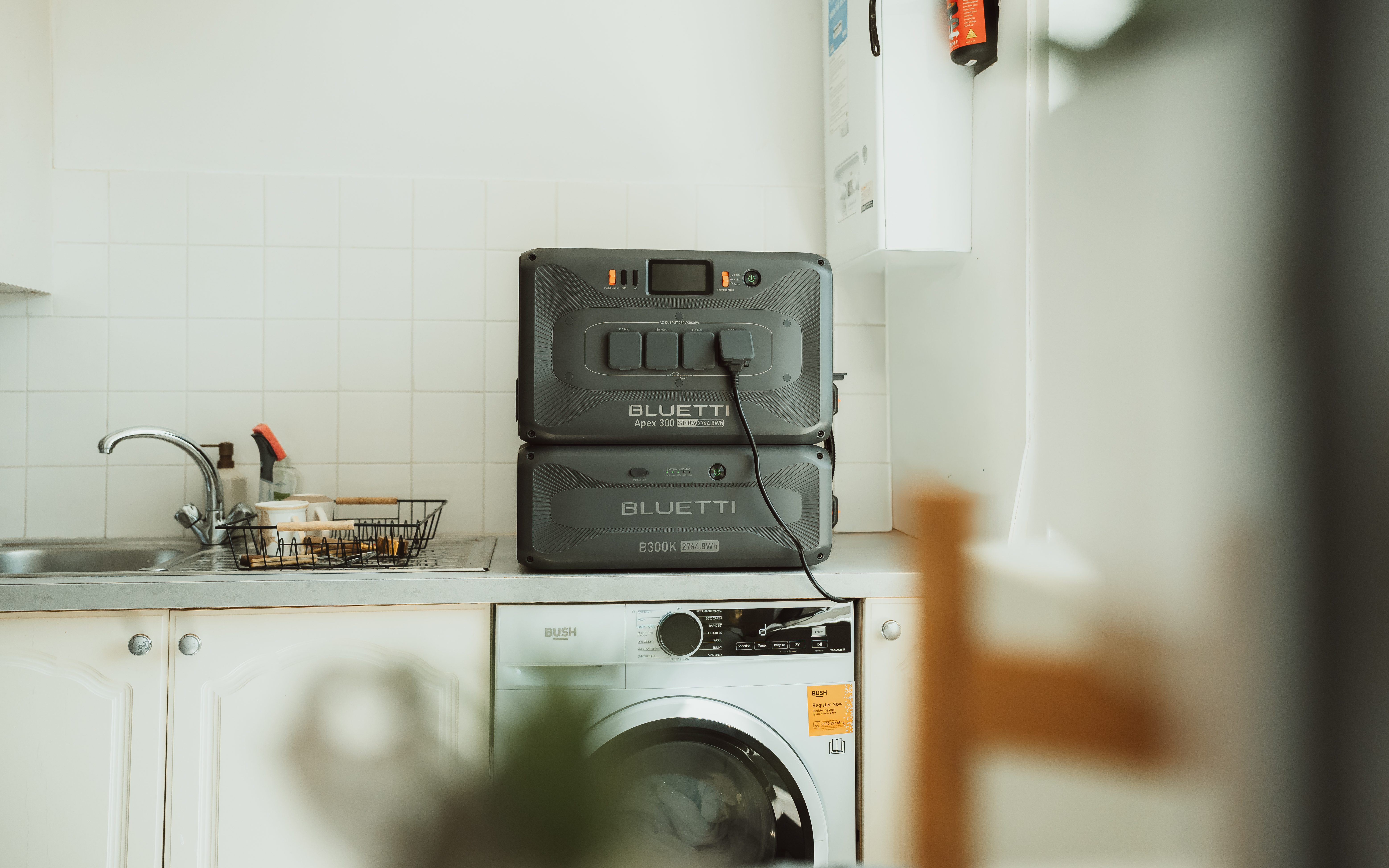
If that is a priority, start by listing the specific loads you need to cover, calculate the watt-hours required for your target duration, and check those requirements against the current specifications of any home battery backup product you consider. The BLUETTI Apex 300 (2,764.8Wh, 3,840W continuous output) is one option in this category, relevant for households that want to back up multiple essential appliances, with actual runtime depending on the connected loads. Review the current product page specifications before purchasing.


Apex 300 Versatile Power Station | 3,840W, 2,764.8Wh
- Smartest 120V/240V Portable Power
- 3,840W | 2,764.8Wh | LiFePO₄
- 0ms UPS Response Time
- 6,000+ Life Cycles to 80% Capacity
- Dual Voltage Output & Expandable Storage
- Ideal for Smart Home Energy Management
Pairing storage with solar panels can extend off-grid runtime during daylight hours, useful in Hawaii given the strong and consistent sun across the islands.
Conclusion
Hawaii is expensive, and the clearest evidence is in electricity rates and housing costs, where public data is most reliable. The size of the gap for any individual household depends on which island, which ZIP code, the number of people sharing the space, and how dependent you are on a car.
The most useful next step is to build your own scenario: choose a specific town, look up the HUD FY2026 small-area rent for that ZIP code, estimate your electricity use at Hawaii's March 2026 statewide residential average of 42 cents per kWh, and decide how many vehicles you genuinely need. Compare the result with your actual income before making a decision.
Frequently Asked Questions
There is no single correct figure. Using the Oahu scenarios above, a single adult might spend approximately $4,100 per month before taxes, savings, and debt, while a family of four might spend closer to $7,900 before childcare costs.
Your actual number moves with rent, the number of vehicles, healthcare coverage, and your specific household. A practical method is to total your expected monthly costs and gross that figure up for your effective income tax rate to find the pre-tax income needed to cover them.

Shop Products for This Article

You May Also Like