


How Can I Power My CPAP While Camping?


You can power a CPAP while camping with a campsite electrical hookup, a dedicated CPAP battery, a portable power station, a compatible vehicle/DC connection, or a power station recharged with solar panels. The right setup depends on your CPAP’s nightly energy use, how many nights you will be off-grid, and whether you also need to power devices such as phones, lights, or a heated humidifier.
Picture yourself getting ready for a camping trip, imagining the calmness of Nature. You breathe in the crisp country air, filling your lungs with it while surrounded by a refreshing scent of pine—your mind throbs in anticipation of a crackling campfire and the soothing comforts of nature.
However, for those suffering from sleep apnea, the idea of camping brings about entirely different problems. How do you deal with the wilderness while ensuring your CPAP device remains powered? It is a valid issue that must be reviewed carefully for effective camping.
Fear not, fellow adventurers! Camping with CPAP therapy is possible and an enjoyable activity. Be it that you are snuggled in a warm tent or poring upwards at the gleaming stars, sleep is only moments away. Let's look at some insights on making your CPAP camping adventure an absolute hit.
Understanding CPAP Power Requirements for Camping
Start by checking your CPAP machine’s voltage and wattage specifications. Watts (W) show how much power the CPAP uses while running, while watt-hours (Wh) show how much energy a battery or portable power station can supply over time.
A simple way to estimate your nightly energy use is:
Energy needed (Wh) = average power (W) × hours of use
For example, a CPAP averaging 40W for 8 hours would require about 320Wh per night before accounting for conversion losses. Actual energy use can vary by CPAP model, pressure settings, heated humidification, heated tubing, battery efficiency, and whether you use AC or a compatible DC connection. When choosing a CPAP power supply for camping, allow extra capacity rather than matching the calculated Wh exactly.
How Can I Power My CPAP While Camping?
Choose a Campsite With Power
The first strategic step when discussing camping with a CPAP machine is picking a campsite with electrical hookups. Choosing a site with electricity access will ensure an easy and reliable power source for your CPAP. Many of them, especially those specifically planned for RVs, have power connections at the designated sites. This ensures a smooth power supply to your CPAP device and allows you the luxury of peace outdoors without worrying about how long the battery will last.
Prepare More CPAP Batteries
The second item on the checklist is to prepare with multiple CPAP batteries. Measure your nightly usage and pack some extra. This insight not only envisions unplanned situations but also lets you live more adventurously without skimping on having a restful night.
Bring a Portable Power Station
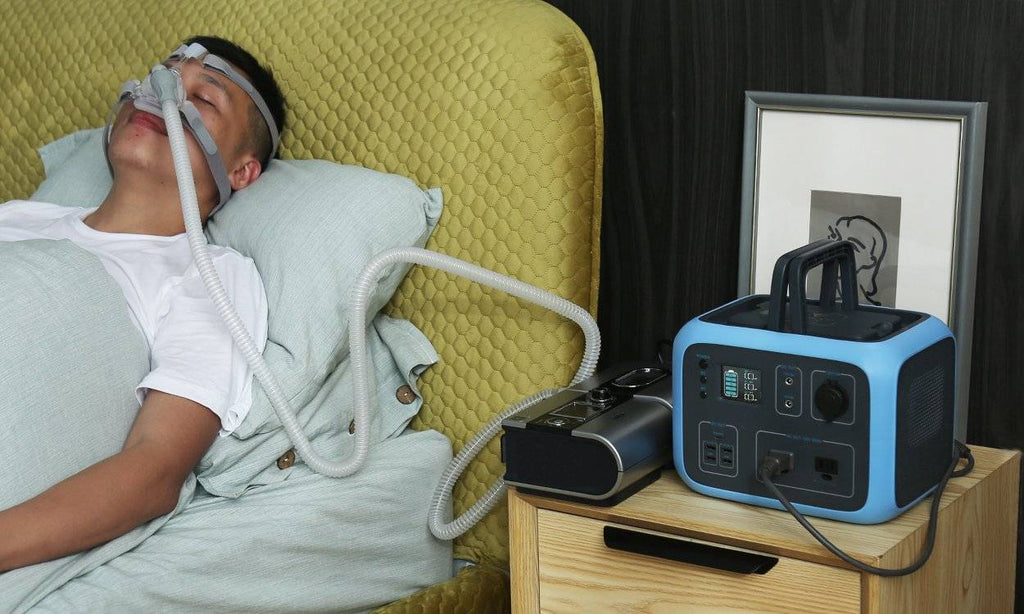
A portable power station offers more flexibility for CPAP camping, especially if you also need to charge phones, lights, or other devices. Choose a model based on battery capacity in watt-hours (Wh), trip length, available AC or DC outputs, and recharge options rather than inverter wattage alone.
For longer trips, a compatible portable power station can be recharged from a vehicle or solar panels during the day. If your CPAP supports a compatible DC connection, using DC may also reduce inverter conversion losses and help extend battery runtime.
How to Choose a CPAP Power Supply for Camping
Quiet Operation
A quiet power source is useful for overnight CPAP use, especially in a tent or small RV where equipment noise can be more noticeable. Portable power stations operate without a fuel engine, making them suitable for powering a CPAP at night without adding generator noise around the campsite.
AC/DC Compatibility
Check whether the power station provides the output your CPAP requires. AC outlets are convenient for using the machine’s standard adapter, while a compatible DC connection may reduce inverter conversion losses and help extend battery runtime. Always confirm the required voltage, connector, and adapter for your CPAP model.
Portability
For CPAP camping, consider the power station’s weight, size, and handle design as well as battery capacity. A compact unit may be easier to carry for short trips, while longer stays may justify a larger-capacity model if you also need to charge phones, lights, or other camping devices.
Flexible Recharging
For multi-day camping, choose a power station that can be recharged from more than one source. AC charging is useful before departure, while vehicle and solar charging can help restore battery capacity during the trip when campsite electricity is unavailable.
3 Portable Power Stations for CPAP While Camping
When choosing a portable power station for CPAP camping, consider more than battery size alone. Trip length, CPAP settings, overnight noise, DC compatibility, other devices, and access to solar or vehicle charging can all affect which setup works best.
BLUETTI Elite 30 V2 — For Tent Camping With a CPAP
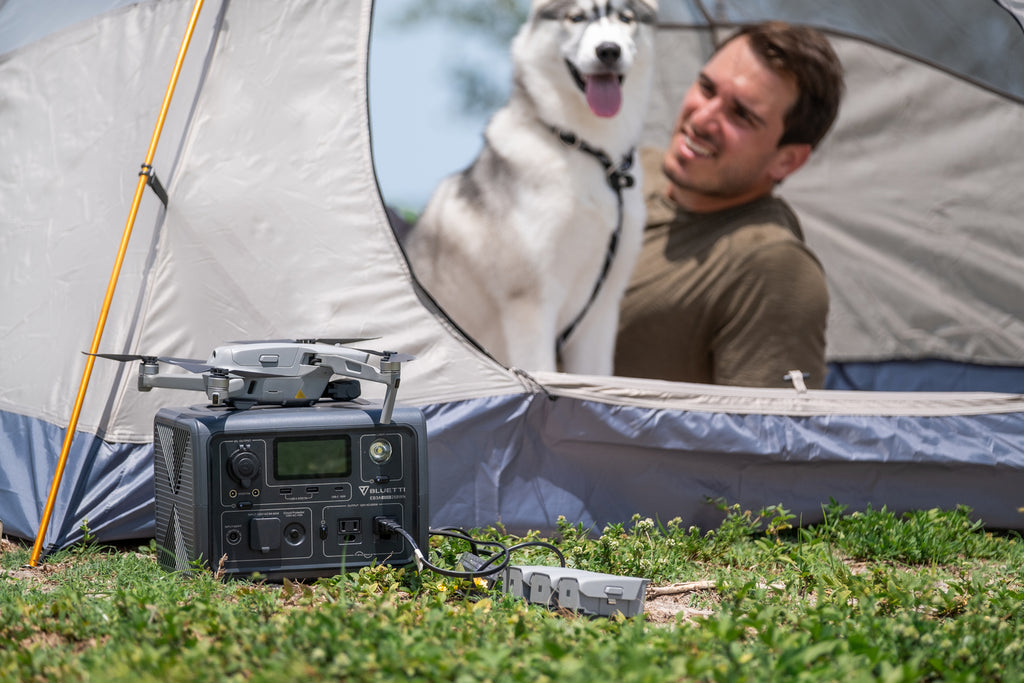
The BLUETTI Elite 30 V2 is a compact portable power station for CPAP camping with 288Wh of LiFePO₄ capacity and 600W AC output. Weighing about 9.48 lb, it is easy to carry between the car, campsite, and tent, making it a practical option for short camping trips where the CPAP is the main overnight load.
For nighttime CPAP use, efficiency and noise matter more than high inverter output. The Elite 30 V2 has standby consumption as low as 4.5W and operates below 30dB under light loads, helping reduce unnecessary battery drain and extra noise while you sleep. Its nine output ports also leave room for small camping essentials such as a phone, light, or other low-power devices.
If your CPAP supports a compatible DC connection, using DC can reduce some inverter conversion losses compared with AC operation. For daytime recovery, the Elite 30 V2 supports AC, vehicle, and solar charging, while TurboBoost charging can restore the battery to 80% in about 45 minutes before departure or between stops.
Its LiFePO₄ battery is rated for more than 3,000 cycles, making the Elite 30 V2 a better fit for campers who want a lightweight CPAP power solution that can also handle frequent short trips, road travel, and repeated recharging over time.
BLUETTI Elite 100 V2 — For Weekend CPAP Use in Cars and RVs
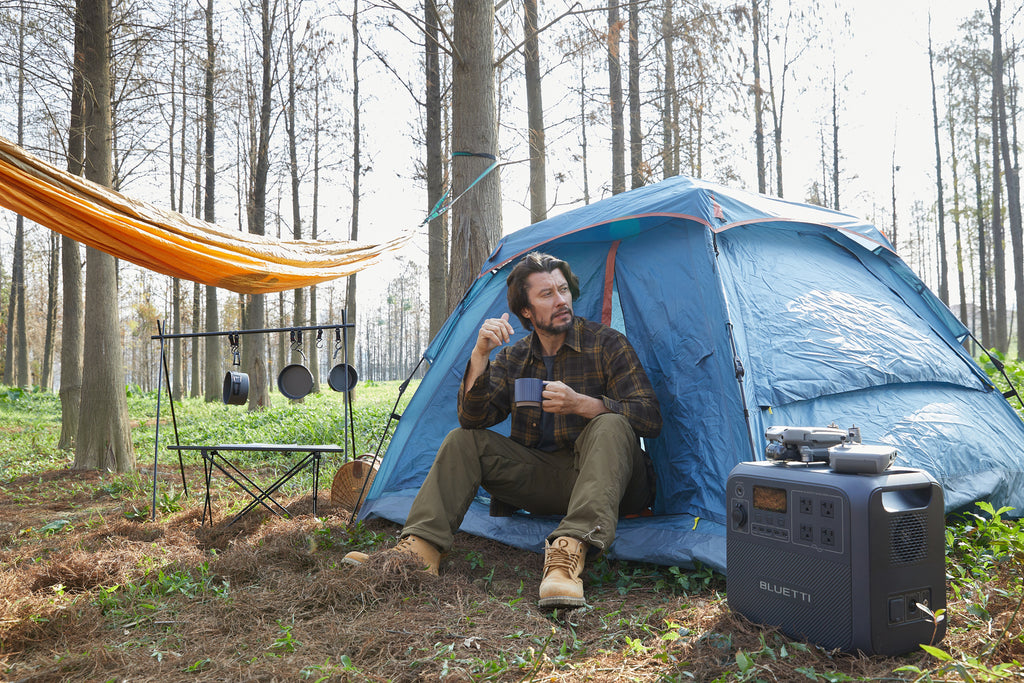
The BLUETTI Elite 100 V2 portable power station combines 1,024Wh of LiFePO₄ capacity with a relatively portable 25 lb design, making it a stronger fit for weekend car camping, RV trips, and campground stays where the same power station may need to support a CPAP plus other small devices.
For overnight use, quiet operation and battery reserve are important. The Elite 100 V2 runs at about 30dB under light loads and provides 11 output ports, so you can keep a CPAP connected while also charging phones, lights, a laptop, or other camping essentials. That extra capacity also gives you more room if your CPAP uses heated humidification or heated tubing, which can increase overnight energy consumption.
If your CPAP supports a compatible DC connection, using DC can help reduce some inverter conversion losses. For longer weekend stays, the Elite 100 V2 supports AC, vehicle, and up to 1,000W solar input, allowing you to recharge while driving or recover energy during the day when campsite hookups are unavailable.
With a good balance of capacity, portability, quiet operation, and flexible recharging, the Elite 100 V2 is a practical portable power station for CPAP users who need more than an overnight battery but do not want to move to a much larger off-grid system.
BLUETTI Elite 200 V2 — For Multi-Night Off-Grid CPAP Use
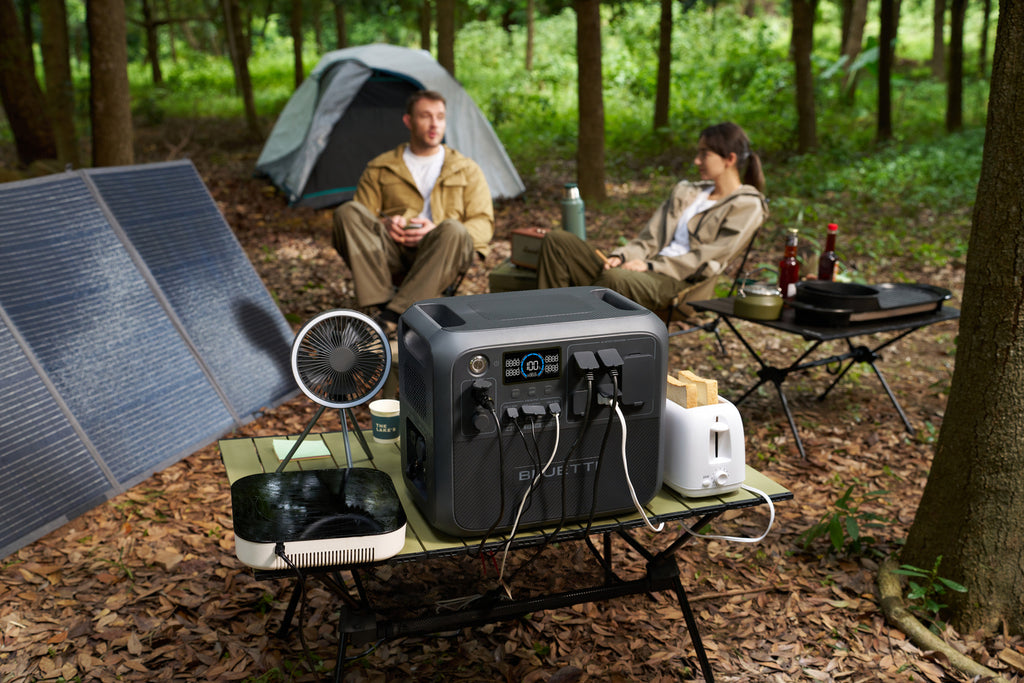
The BLUETTI Elite 200 V2 is built for longer off-grid stays, with 2,073.6Wh of LiFePO₄ capacity and enough reserve for several nights of CPAP use plus additional camping devices. It is better suited to boondocking, base-camp setups, and multi-day trips where shore power may be unavailable for extended periods.
For CPAP camping, the larger battery gives you more flexibility around real-world variables such as longer sleep times, heated humidification, heated tubing, and shared loads from phones, laptops, lighting, or other electronics. It can power multiple devices at once, so the CPAP does not have to be the only device drawing from the system.
The Elite 200 V2 also supports vehicle charging and up to 1,000W solar input, making daytime recharging much easier on longer trips. That means you can use solar or alternator-based charging to recover energy during the day, then reserve more of the stored capacity for overnight CPAP use.
With low-load noise starting around 16dB and a larger energy reserve between recharges, the Elite 200 V2 is a stronger choice when multi-night runtime, off-grid flexibility, and multi-device use matter more than minimum weight.
5 Tips for Bringing Your CPAP Camping
Plan Beforehand
Planned woodland fun and frolics while suffering from sleep apnea require careful consideration. Take a minute to plan whether you will power your CPAP with electricity or solar energy. Make sure that all main parts, such as a solar generator, are included in the backpack and charged before going to bed surrounded by Nature's beauty. Before hitting the woods for a short night or two, it is wise to prepare for unexpected turns.
Keep Your Power Source Fully Charged
If you use a portable battery or power station for your CPAP, charge it fully at home before departure. This helps avoid last-minute charging at the campsite and gives you more reserve for unexpected delays or higher-than-expected overnight energy use.
Ensure Your CPAP Machine Stays Clean and Dry
When leaving the familiar warmth of home, handling your CPAP becomes more important. Water, condensation, dirt, and dust can affect operation or damage equipment. Store your CPAP in a dry, protective case and avoid placing the machine or power source directly on damp ground.
Recharge During the Day
For multi-day camping, recharge your battery or portable power station during daylight instead of relying on one full charge for the entire trip. Vehicle charging works well for car or RV camping, while solar can help at a fixed campsite. Actual solar recovery varies with panel size, weather, shade, and available sunlight, so it is best to keep another charging option available.
Check Voltage and Adapter Compatibility
Before leaving, confirm your CPAP’s required voltage and whether it supports a compatible 12V or DC adapter. Using the wrong power supply can trigger errors or prevent the machine from starting. A compatible DC connection may also reduce conversion losses compared with running the CPAP through an AC inverter.
Final Thoughts
Don't let sleep apnea curtail your happiness with life adventures. Pack your CPAP machine and one of BLUETTI's portable power stations when the woods call. With flexible AC, vehicle, and solar charging options, a suitable power station can help keep your CPAP powered throughout camping trips while also supporting other essential devices.
Frequently Asked Questions
Yes, if your CPAP supports a compatible 12V DC connection and the correct adapter is used. For car or RV camping, another option is to recharge a BLUETTI portable power station while driving, then use the stored battery power for your CPAP overnight. BLUETTI camping power stations such as the Elite 100 V2 and Elite 200 V2 support vehicle charging, while compatible alternator chargers such as Charger 1 or Charger 2 can provide faster on-the-road recharging for longer trips. This helps preserve the vehicle’s starter battery while keeping overnight CPAP power available at camp.

You May Also Like


