
Do Solar Panels Work With Snow on Them? Winter Solar Performance Explained

Whether solar panels work with snow on them depends largely on how much of the active cell surface is covered. In cold, clear winter weather, uncovered photovoltaic cells can operate more efficiently because lower cell temperatures generally improve electrical performance. However, shorter days, cloud cover, and snow accumulation can still reduce total energy generation. If a thick blanket of wet snow covers the cells, output can drop to near zero. Published research from Sandia National Laboratories reports annual snow-related energy loss estimates of approximately 1% to 12%, depending on location and conditions, while monthly losses in some heavy-snow locations can reach 100%.
Winter storms bring a familiar dilemma for solar owners: you wake up to find your roof or ground-mount array buried under a heavy layer of snow. It is easy to assume that because the sun is shining on a crisp sub-zero morning, your system is producing plenty of power.
Understanding winter solar performance requires separating ambient cold-weather efficiency from physical snow blockage. Knowing how partial coverage, reflected light, and energy storage interact during freezing months helps you set realistic expectations for your off-grid or home backup system.

How Winter Weather Affects Photovoltaic Generation In Solar Panels
Uncovered cells may still generate in snowy weather, but snow over the active surface can sharply reduce or nearly eliminate output, and the two situations call for opposite responses.
Snow Nearby Is Not the Same as Snow on the Cells
Snow on the ground around an array is not the same problem as snow on the panels. The US Department of Energy's winter PV resilience guidance notes that most snow melts quickly off panels or is blown off by wind, and a clear panel in cold weather is a working panel. Modules run more efficiently in the cold, since temperatures above 77°F decrease voltage. What stops generation is snow sitting on the active surface, and that is a question of coverage, not of the season.
Solar Panels Partly Covered With Snow Vs Fully Covered:
Do solar panels work when covered with snow? Barely; once the cover is complete, a fully covered panel may generate next to nothing. So do solar panels work with snow on them when only part of the array is covered?
Yes, partly, and unevenly. In many conventional string-inverter systems, modules are connected in series strings, so shading on part of a module can limit the current through the wider string. Bypass diodes allow current to route around affected cell sections. Systems using module-level power electronics, such as microinverters or power optimizers, can manage partial shading differently. The actual output loss depends on the system architecture, which cells are covered, and how the array is wired. Ten percent of the cells covered does not mean ten percent of the output lost; it can mean much more, or much less.
Condition |
Likely performance effect |
What decides the outcome |
Snowfall with mostly clear cells |
Generation can continue |
Available sunlight and cloud cover |
Partial cell coverage |
Output can fall unevenly |
Module design, wiring and coverage pattern |
Heavy complete coverage |
Generation may become negligible |
Snow opacity and exposed cell area |
Clear panels with snow on surrounding ground |
Reflected light may contribute |
Geometry, surface conditions, and sunlight |
Snow on Your Panels: What It Costs in Power
Sandia National Laboratories reports published estimates of annual snow-related PV energy losses ranging from approximately 1% to 12%, depending on location and weather conditions.
However, looking only at the annual estimates can be misleading. In some locations and weather conditions, monthly snow-related energy losses can reach 100%. This represents the potential loss of the month's expected generation, not a universal prediction that every panel remains completely inactive for several weeks. A mild winter may yield negligible losses, while a heavy-snow season can temporarily reduce or eliminate generation during periods of snow coverage.
The Real Impact of Cold Temperatures And Albedo Reflection
Homeowners often wonder if bright, snowy ground will boost winter production through reflected light (albedo effect). While fresh snow on the ground reflects a significant amount of sunlight back upward toward tilted panels, reflected albedo cannot compensate for snow sitting directly on the glass.
If your panels are buried, surrounding ground reflection hits blocked cells with nowhere to go. Once natural shedding clears the glass, lower cell temperatures and reflected sunlight may contribute to generation on clear winter days. Actual output still depends on available sunlight, panel orientation and operating conditions.
Can Solar Panels Melt Snow Off Themselves?

When snow blankets an array, waiting for it to clear naturally is often the default strategy. But how quickly does that happen?
Solar Absorption and Gravity-Assisted Sliding
Most snow melts naturally from solar panels or is blown away by wind as weather conditions improve. How quickly an array clears depends on sunlight, temperature, wind, panel tilt, snow type and module construction. Light, dry snow may shed more readily, while wet snow and bonded ice can remain on the surface.
However, natural melting is never guaranteed. If ambient temperatures remain deeply sub-freezing, or if the snow is wet and sticky, it can freeze into an opaque crust of ice that remains on the glass even when sunlight returns.
Standard Glass Cleanliness Versus Active Thermal Deicing
Standard residential solar arrays rely entirely on passive shedding (tilt, gravity, and ambient warmth). Standard photovoltaic panels do not automatically melt snow simply because they generate electricity. Their primary function is converting sunlight into electrical energy, not heating the module surface to clear snow. Natural melting and shedding depend on sunlight, ambient temperature, wind, panel tilt and snow characteristics. While specialized active deicing systems (such as heated backing sheets or fluid circulation loops) exist for industrial or specialized remote applications, they are uncommon in standard residential setups due to high installation costs and the fact that melting snow requires consuming significant electrical energy.
When manual intervention is required, proper solar panel snow removal methods must be followed carefully to protect the glass.
Comparing Rooftop Arrays and Ground-Mounted Portable Systems
The physical location and mounting style of your solar setup dramatically change how you manage winter weather.
Fixed Rooftop Angles and Physical Access Limitations
Rooftop installations offer the advantage of height, keeping panels out of the way of foot traffic and blowing drifts.
However, they suffer from two major winter constraints:
-
Fixed Tilt: If your roof pitch is relatively shallow, snow is much slower to slide off naturally.
-
Access Constraints: Climbing onto an icy, snow-covered roof creates severe safety risks. Accessing rooftop panels for manual clearing is hazardous and often requires professional service.
A portable panel is the one case where you can do something.
The BLUETTI SORA 500 is a 500W foldable panel with up to 25% efficient N-Type cells and MC4 connectors, and its stand adjusts the angle so sunlight hits the surface squarely. Set it where it is accessible, face it toward available sunlight, keep it out of drifts, snow piles, shade, and vehicle paths, and bring it inside when a storm is coming.


BLUETTI 500W Solar Panel
Learn MoreIts manual says to check regularly for dirt and wipe it with a soft cloth, and warns against bending the panels, damaging them with sharp objects, or subjecting them to strong impacts. These are care instructions for dirt cleaning and general handling, not authorization to wipe, brush, or scrape snow or bonded ice from the panel. Relocation helps, but it does not guarantee full rated output: 500W is a rating under test conditions, and daily energy depends on the sun you actually get.
Managing Battery Reserves During Extended Snow Cover
When winter storms knock out the grid, and your solar panels are covered in snow, your home energy equation changes immediately. You must shift from relying on live solar generation to managing your stored battery reserves.
Calculating Daily Watt-Hour Yields Versus Peak Ratings
To understand your daily energy inflows during winter, evaluate expected watt-hour yield rather than trusting sunny-day nameplate ratings.
Consider an illustrative daily recharge budget using a clean 500W portable solar panel operating under winter conditions:
Clear-Case Daily Harvest = 500 W x 2 Equivalent Full-Sun Hours x 0.75 Net Collection Factor = 750 Wh
If a winter snowstorm or heavy cloud cover permits only a fraction of that normal harvest, modeled here with an illustrative remaining-harvest factor of 20%:
Snow-Case Daily Harvest = 750 Wh x 0.20 = 150 Wh
Note: The 750Wh clear harvest and the 20% snow-case restriction are illustrative mathematical assumptions to highlight winter output drops, not measured test results for the SORA 500 panel. Actual winter generation depends entirely on local weather.
Compare either estimated daily harvest with the actual daily energy consumption of your connected loads. If your loads use more energy than the panels generate, the shortfall must come from stored battery energy. If solar harvest exceeds consumption, the remaining energy may be available to recharge the battery, subject to the power station's charging limits and system losses. For example, if your connected loads use 500Wh per day and snow-case solar harvest is only 150Wh, the 350Wh shortfall must come from stored battery energy.
Backup Storage Longevity While Panels Are Blocked
A common misconception is that having solar panels guarantees continuous power during a snowstorm. In reality, solar panels only generate electricity when exposed to unobstructed light.
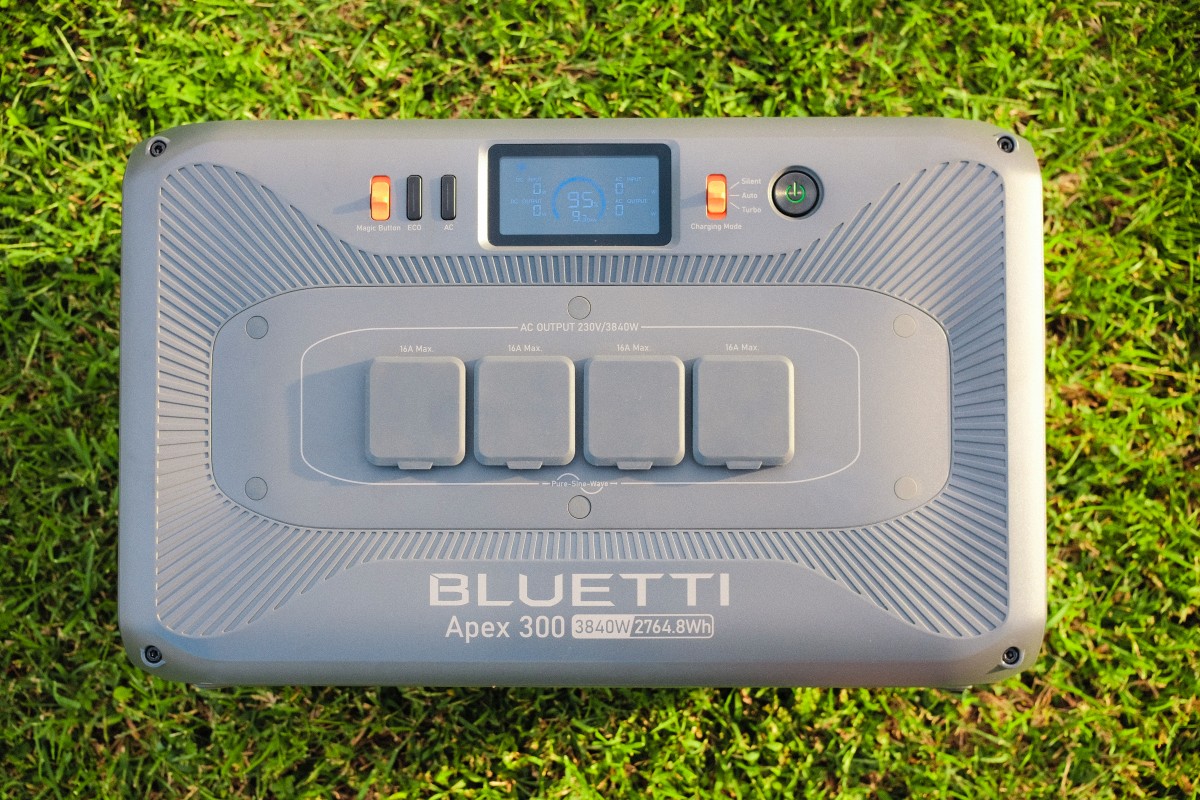
During an outage accompanied by heavy snow cover, your system relies entirely on your battery storage core. A reliable home battery backup system like the BLUETTI Elite 300 Portable Power Station can supply essential household loads, but it can only do so while its stored usable energy lasts. Extended snow cover stops solar replenishment completely until the glass is cleared or natural melting occurs.


BLUETTI Elite 300 Portable Power Station | 2,400W, 3,014Wh
- Frost & Sullivan® Certified —The World's Smallest 3 kWh Portable Power Station
- 1,200W Max Solar Input
- ≤10ms UPS Response Time
- 6,000+ Life Cycles to 80% Capacity
- 3kWh Power at 2kWh Portability
- 11 Versatile Ports for Plug-and-Play Convenience
- TT-30 RV Port — Ideal for Van Life & DIY Setups
Cold-Temperature Charging Safeguards for Storage Units
Solar panel cold-weather performance and battery operating temperature limits are separate considerations. Each power station has its own permitted charging and discharging temperature ranges, which depend on its specific battery design and model.
For example, the BLUETTI Pioneer Na Sodium-Ion Battery supports charging down to 5°F and discharging down to −13°F. These are Pioneer Na model-specific operating limits and should not be assumed to apply to other BLUETTI lithium-ion or sodium-ion batteries.


BLUETTI Pioneer Na(Sodium) Portable Power Station | 1,500W 900Wh
- 1,500W AC Output / 2,250W Power Lifting Mode
- Cold-Proof Charging down to −15°C
- Reliable Power Output down to −25°C
- 0–80% Recharging in 35 Minutes
- 4,000+ Sodium-Ion Battery Life Cycles

When to Intervene or Wait for a Thaw

Deciding whether to clear snow from your solar array comes down to a balance of safety, urgency, and accessibility:
-
When to Wait: If panels are mounted high on an icy roof, or if weather forecasts predict an immediate afternoon thaw that will clear the glass naturally, waiting is the safest and easiest choice.
-
When to Clear: If you have accessible ground-mounted panels and their manufacturer permits manual snow removal, gentle clearing can restore energy harvesting. For portable panels such as the BLUETTI SORA 500, follow the model-specific care instructions rather than assuming that manual snow or ice removal is permitted.
For step-by-step guidance on safe cleaning tools, approved techniques, and common mistakes to avoid, review our detailed guide on solar panel snow removal.
Frequently Asked Questions
No. In conventional series-string configurations, covering a small percentage of active cells can disproportionately affect the current output of the string. Internal bypass diodes help mitigate this shading loss by routing current around blocked cell sections. Systems using module-level power electronics, such as microinverters or power optimizers, can respond differently. Partial snow cover therefore rarely results in a linear, proportional drop in power.

Shop Products for This Article


You May Also Like