
Solar-Powered Cooler for Camping: How It Works and Is It Worth Buying?

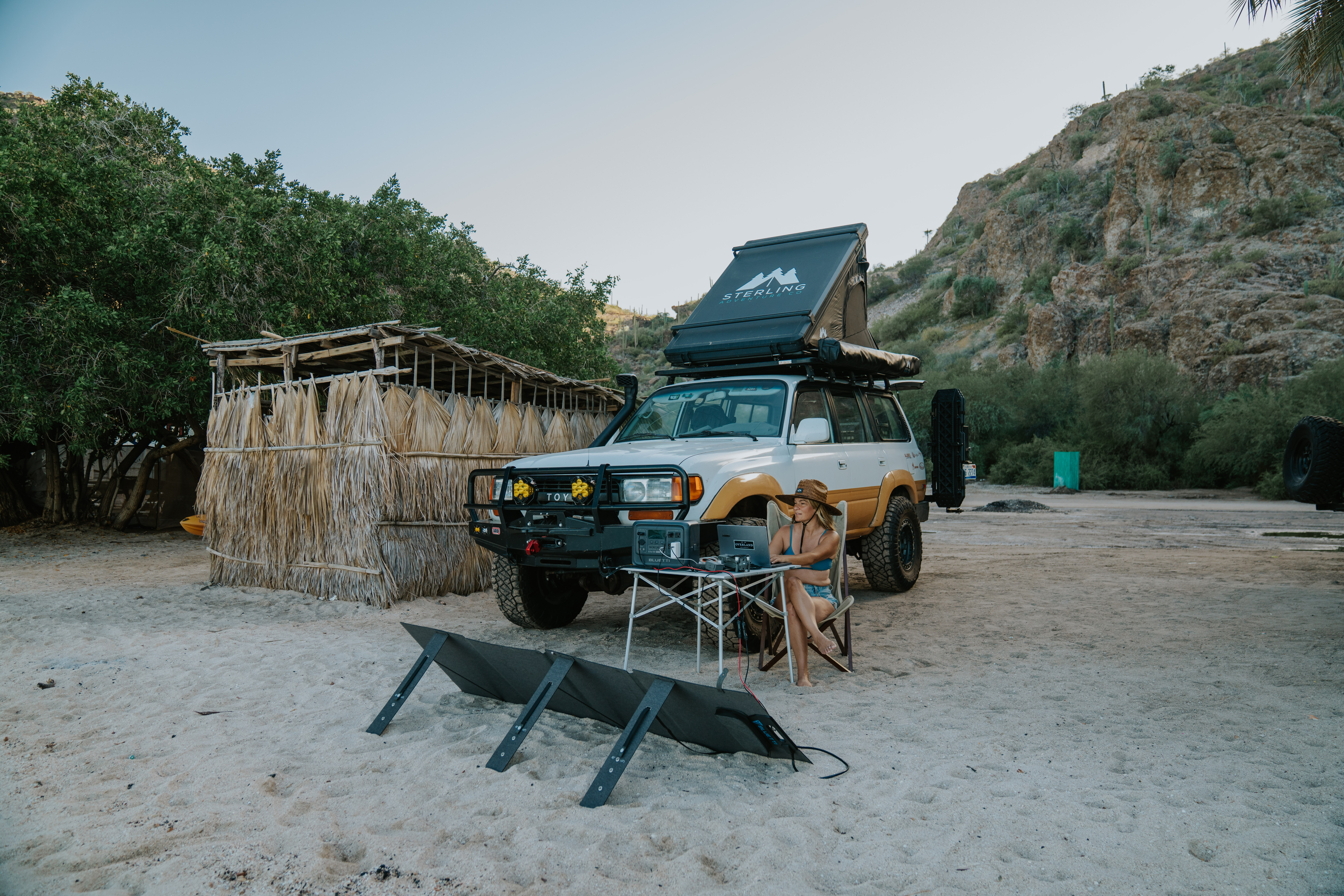
- A solar-powered cooler typically combines a 12V compressor cooler, battery storage, and portable solar panels.
- Battery storage is usually essential for reliable off-grid operation because solar output varies and stops at night. Some coolers can also operate from a vehicle, wall outlet, or compatible direct solar input.
- Compressor coolers provide better temperature control and more usable storage than traditional ice chests.
- Battery size should be based on the cooler's daily energy consumption, not its running wattage.
- Solar charging can extend runtime but should not be expected to provide unlimited power.
- Food should always be kept at 40°F (4°C) or below for safe refrigeration.
A solar-powered cooler can keep food and drinks cold without constantly buying or replacing ice. Unlike a traditional ice chest, most solar-powered cooling systems use a 12V compressor cooler powered by a rechargeable battery, which can be recharged from portable solar panels, a vehicle, or the grid.
In most cases, "solar-powered cooler" describes the complete energy system rather than the cooler alone. The solar panel recharges a battery, and the battery supplies stable power to the compressor. This guide explains how a solar-powered cooler for camping works, how much power it needs, and how to choose the right battery and charging setup for longer off-grid trips.

What Is a Solar-Powered Cooler?
Yes, solar-powered coolers are widely available, but most are not ordinary coolers with a small solar panel attached.
A practical system usually includes three components:
-
A 12V compressor cooler
-
A rechargeable battery or portable power station
-
Portable solar panels
The battery powers the cooler overnight and during cloudy weather, while the solar panels recharge the battery during the day.
A solar-powered camping cooler may be:
-
A standard compressor cooler connected to an external power station
-
An integrated system with removable batteries, such as the BLUETTI MultiCooler
The MultiCooler supports removable 716.8Wh B70 batteries and compatible solar charging up to 200W. Those batteries can also power other compatible BLUETTI SwapSolar products.
Traditional Ice Chest vs. Solar-Powered Ice Chest
Products marketed as a "solar-powered ice chest" are usually portable compressor refrigerators or cooler/freezers powered by a battery-and-solar system rather than conventional ice chests.
|
Feature |
Traditional Ice Chest |
Compressor Cooler |
|
Cooling method |
Ice or frozen packs |
Electric compressor |
|
Storage space |
Reduced by ice |
Nearly all space available for food |
|
Temperature control |
Depends on remaining ice |
Adjustable thermostat |
|
Maintenance |
Replace ice and drain water |
Recharge battery and maintain ventilation |
|
Cooling capability |
Refrigeration only while ice lasts |
Refrigeration or freezing while powered |
Regardless of the cooling method, perishable food should remain at 40°F (4°C) or below.
Are Solar Powered Coolers Worth It?
A solar-powered cooler/freezer is often worthwhile for:
-
Frequent campers
-
Overlanders
-
RV travelers
-
Boaters
-
Long road trips
-
Remote campsites
Advantages include:
-
No routine ice purchases
-
More usable storage space
-
Adjustable cooling temperatures
-
Refrigeration or freezer operation
-
Less need to leave camp for supplies
However, occasional campers who only make short trips may find a quality ice chest more economical.
|
Factor |
Traditional Cooler |
Solar Powered Cooler |
|
Initial cost |
Lower |
Higher |
|
Ongoing ice purchases |
Usually required |
Usually unnecessary |
|
Battery required |
No |
Yes |
|
Solar panels |
No |
Optional but useful |
|
Temperature control |
Limited |
Adjustable |
The long-term value depends on camping frequency, battery ownership, and the convenience of reliable refrigeration. A solar-powered camping cooler is most worthwhile when you camp frequently, travel for several days, already own compatible battery equipment, or need reliable temperature control. An ice chest may offer better value for occasional overnight trips where ice is readily available.
Drawbacks of Solar Cooling
The main disadvantages include:
-
Higher upfront cost
-
Battery capacity required for overnight use
-
Solar production varies with weather
-
More equipment to transport
Solar charging depends on:
-
Sunlight
-
Shade
-
Panel angle
-
Temperature
-
Charging losses
Because compressor coolers also need adequate airflow, both the cooler and battery system require proper ventilation.
How Much Power Does a Solar-Powered Cooler Need?
Power consumption varies depending on:
-
Cooler size
-
Ambient temperature
-
Thermostat setting
-
Insulation
-
Compressor efficiency
-
Lid openings
-
Whether food was pre-cooled
Rather than focusing on running wattage, use the manufacturer's daily energy consumption (Wh/day) whenever possible.
Estimate runtime with:
Runtime (days) = Usable battery capacity (Wh) ÷ Daily energy consumption (Wh)
For example:
-
Cooler consumption: 400Wh/day
-
Battery capacity: 600Wh usable
Estimated runtime: approximately 1.5 days without recharging.
|
Cooler Type |
Typical Compressor Draw |
Planning Recommendation |
|
20–30L cooler |
30–45W |
Size battery using daily Wh consumption |
|
35–50L fridge |
40–60W |
Allow overnight reserve |
|
50L+ dual-zone fridge/freezer |
50–80W+ |
Measure real-world energy use before sizing solar |
These are broad planning examples, not universal specifications. Some compressors draw more during startup, and average energy use is lower than running wattage when the compressor cycles off. Use the manufacturer's measured Wh/day figure whenever available.
To estimate solar size, divide daily energy consumption by expected peak sun hours, then add capacity for charging losses and poor weather.
Suppose a cooler uses 400Wh per day. Dividing 400Wh by four effective peak-sun hours gives a theoretical panel requirement of 100W. After allowing for heat, panel angle, charging losses, clouds, and battery inefficiency, a larger array—such as 150–200W—may be more practical. This is an illustration, not a production guarantee.
Do not size the battery only for one average day. Include enough reserve to operate overnight and through at least part of a cloudy day, especially when storing meat, dairy products, medication, or other temperature-sensitive contents.
Pre-cool the cooler and its contents from grid power before departure when possible. Loading warm food or drinks forces the compressor to use substantially more energy during the first several hours.
Electrical and Weather Safety
-
Keep the cooler, battery, plugs, and connectors dry.
-
Do not place the power station in pooled water or direct rain.
-
Protect cables from pinching, crushing, and trip hazards.
-
Follow panel wind and weather ratings.
-
Do not block compressor or battery cooling vents.
-
Use only compatible cables and adapters.
-
Stop using damaged, overheating, or discolored connectors.
-
Secure the cooler during vehicle travel.
-
Do not leave deployed solar panels where they could obstruct traffic or be driven over.
Building a Solar-Powered Camping Cooler Setup
Most campers choose one of three approaches:
-
Compressor cooler + portable power station + solar panel
-
Integrated battery ecosystem
-
Vehicle charging combined with solar
A portable power station can also run lights, phones, cameras, laptops, and other campsite electronics.

Option 1: Cooler + BLUETTI Elite 300
The BLUETTI Elite 300 is designed for longer vehicle-based trips where a cooler operates alongside several other devices.


BLUETTI Elite 300 Portable Power Station | 2,400W, 3,014Wh
- Frost & Sullivan® Certified —The World's Smallest 3 kWh Portable Power Station
- 1,200W Max Solar Input
- ≤10ms UPS Response Time
- 6,000+ Life Cycles to 80% Capacity
- 3kWh Power at 2kWh Portability
- 11 Versatile Ports for Plug-and-Play Convenience
- TT-30 RV Port — Ideal for Van Life & DIY Setups
For shorter weekend trips with a smaller cooler, a lower-capacity power station is usually lighter and easier to transport.
When driving, the Elite 300 can also recharge through the BLUETTI Charger 2 using compatible alternator and solar inputs.
Option 2: Add Portable Solar Panels
Adding a compatible portable solar panel allows daytime battery recharging while the cooler continues operating.
Solar production depends on:
-
Peak sun hours
-
Panel orientation
-
Weather
-
Shade
-
Temperature
-
Charging losses
Before connecting panels, always confirm voltage, current, connector compatibility, and maximum solar input.
Integrated Cooling Ecosystem
Campers wanting fewer separate components may prefer an integrated cooler with solar power ecosystem.
The BLUETTI SwapSolar system combines removable B70 batteries with compatible devices such as:
The MultiCooler provides:
-
42-quart capacity
-
Refrigerator and freezer modes
-
Integrated ice maker
-
Noise below 45dB (under stated conditions)
-
Support for removable B70 batteries
-
Solar charging up to 200W
Actual runtime depends on ambient temperature, set temperature, compressor cycling, lid openings, and available solar energy.
Choosing the Right Setup
The best solar-powered cooler for camping depends on:
-
Trip duration
-
Cooler energy consumption
-
Battery capacity
-
Available vehicle charging
-
Expected sunlight
-
Number of additional devices
Weekend campers may only need a compact power station, while extended vehicle-based travel benefits from larger batteries and daytime solar charging.
Before purchasing:
-
Check the cooler's daily energy use.
-
Size the battery for overnight operation.
-
Estimate available solar production.
-
Confirm voltage, current, wattage, and connector compatibility.
Proper sizing is far more important than simply buying the largest battery or solar panel.
Frequently Asked Questions
Yes.
Some compressor coolers include built-in or removable batteries, while others use an external portable power station.
External batteries often provide longer runtime and can power additional campsite equipment.

Shop Products for This Article

You May Also Like