
Best Solar Generator for First-Time Buyers (2026 Guide)

Solar generators have successfully transitioned from niche gear for survivalists to mainstream household tools. In 2026, the market has reached a critical maturity point. Increased manufacturer competition has stabilized prices while technical reliability has soared.
The most significant shift is the universal adoption of LiFePO4 (Lithium Iron Phosphate) battery chemistry as the industry standard. Unlike the older lithium-ion (NMC) cells, LiFePO4 offers superior thermal stability—a non-negotiable safety feature for home storage—and an operational lifespan that easily exceeds a decade. Whether you are seeking energy independence for van life, preparing for hurricane-season blackouts, or outfitting a weekend campsite, this guide clarifies the path to choosing the right system.
Defining the Solar Generator in Plain Language
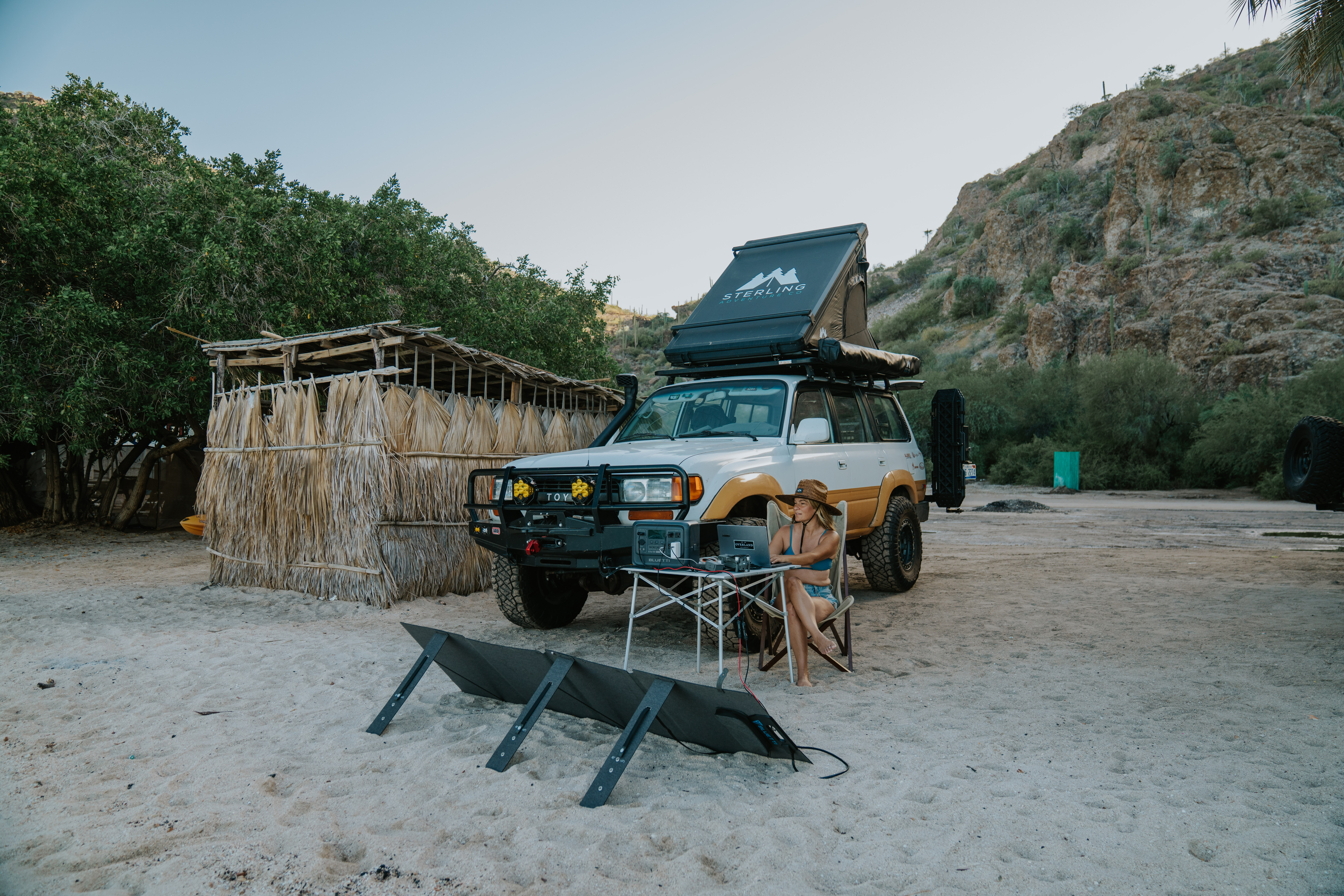
A solar generator is a cohesive energy ecosystem rather than a single machine. It comprises two primary components: a portable power station (the battery) and solar panels (the collector). The panels harvest energy from the sun, which the power station then stores for later use.
Unlike a standard battery backup that only recharges from a wall outlet, a solar-ready system provides true independence by recharging off-grid. Within the power station, a critical component called an inverter converts the stored DC power into the AC power required by household electronics. This conversion is what allows you to run everything from sensitive laptops to medical devices and kitchen appliances anywhere in the world.
The Motivation: Why People Buy Their First Solar Generator
The move toward solar generators is rarely just about "going green"; it is about resilience. U.S. power grids are facing unprecedented strain from increasing storm frequency and aging infrastructure. Homeowners are actively replacing loud, exhaust-heavy gas generators with silent, clean-running battery systems to keep the lights on without the logistics of fuel storage.
Beyond home backup, high-tech lifestyle trends drive adoption. Mobile professionals and outdoor enthusiasts now carry power-hungry ecosystems. Whether you are managing a Starlink terminal for remote work or recharging professional-grade drones like the DJI Mavic 3 Pro or DJI Air 3S, you need high-wattage mobile power that standard vehicle ports cannot provide.
What First-Time Buyers Need to Know (Before They Buy)
The Specs That Actually Matter
Technical spec sheets are often padded with marketing fluff. Focus on these five metrics to understand what a unit can actually do:
-
Capacity (Wh): This is your literal runtime ceiling. Measured in Watt-hours, it tells you the total energy stored. Once these are spent, your devices go dark.
-
Output (W): The continuous power the unit can deliver. This determines what you can run (e.g., a 2,000W output can handle a space heater; a 500W unit cannot).
-
Surge (W): This is the peak power available for split seconds. High-draw appliances like refrigerators require a burst of energy to engage the compressor; without sufficient surge overhead, the system's Battery Management System (BMS) will trip.
-
Solar Input (W): The maximum rate of recharge from photovoltaic panels. If your battery is huge but your solar input is low, you’ll be waiting days for a full charge.
-
Battery Chemistry (LiFePO4 vs. NMC): Always choose LiFePO4 for home use. It is safer, more chemically stable, and lasts 3,000+ cycles compared to the ~500-800 cycles of lightweight NMC batteries.
Common First-Timer Mistakes to Avoid
-
Underestimating Energy Density: Don't buy for your "average" use; buy for your "peak" emergency needs.
-
Ignoring the Solar-to-Battery Ratio: A 3,000Wh battery paired with a single 100W panel is a mismatch that leaves you vulnerable during extended outages.
-
Surge Watt Oversight: Many appliances with motors (fridges, pumps, and pellet grill igniters) require roughly 3x their running wattage to start. If your generator’s surge rating is insufficient, the appliance will fail to initialize.
-
Chasing Off-Brand Discounts: Unknown brands often skip over-current protection and lack 5-year warranties, turning your "investment" into a fire hazard.
BLUETTI Beginner Bundles: Three Tiers for Every Need
1. Elite 200 V2 + 350W Portable Solar Panel (The Fast-Recovery Starter Kit)


BLUETTI Elite 200 V2 Portable Power Station | 2,600W 2,073.6Wh
- 2600W | 2073.6Wh | LiFePO₄
- 15ms UPS Response Time
- 6,000+ Life Cycles to 80% Capacity
- MPPT Controller, BMS, and More
- Ideal for Home Backup and Outdoor Adventures
for the "Emergency Prepper" in an apartment or small home, this kit focuses on sustaining life’s critical medical and communication essentials with an incredibly fast solar recharge rate.
-
Capacity & Output: 2,073.6Wh capacity with a 2,600W continuous output (3,900W lifting power).
-
Real-World Runtimes: Using the standard (Battery Wh × 0.8) ÷ Running Watts formula, the Elite 200 V2 powers a standard 30W CPAP machine for over 55.2 hours continuously, or keeps a 50W mini-fridge safely chilled for about 33.1 hours.
-
Solar Math: Pairing this 2kWh unit with a massive 350W solar panel provides an exceptional 16.8% solar-to-battery ratio. This guarantees that even on hazy or partially cloudy days, first-time users can easily refill the battery from 0 to 100% in a single afternoon.
2. Elite 300 + 350W Portable Solar Panel (The Family Sweet Spot)


BLUETTI Elite 300 Portable Power Station | 2,400W, 3,014Wh
- Frost & Sullivan® Certified —The World's Smallest 3 kWh Portable Power Station
- 1,200W Max Solar Input
- ≤10ms UPS Response Time
- 6,000+ Life Cycles to 80% Capacity
- 3kWh Power at 2kWh Portability
- 11 Versatile Ports for Plug-and-Play Convenience
- TT-30 RV Port — Ideal for Van Life & DIY Setups
Dubbed the "World's Smallest 3 kWh," this is the tactical choice for suburban families. It compresses massive power into a highly portable footprint, allowing you to easily move it from the kitchen to the patio or load it into an RV.
-
Capacity & Output: 3,014.4Wh capacity with a 2,400W continuous output (4,800W lifting power).
-
Real-World Runtimes: It comfortably manages the intermittent cycling of a standard household refrigerator for over 17 hours, or keeps a 60W Starlink terminal actively broadcasting for over 40.1 hours.
-
Solar Math: The high-efficiency 350W panel offsets heavy daily power draws, providing a real-world recharge of approximately 10 to 11 hours when factoring in typical solar efficiency losses.
3. Elite 400 + 350W Portable Solar Panel (The All-In-One Powerhouse)


BLUETTI Elite 400 Portable Power Station | 3,840Wh, 2,600W
- Perfectly Sized Solar Generator: 3,840 Wh capacity, just right for home backup and outdoor adventures.
- Wheels and handles for easy transport
- High Output: 2,600 W rated, 3,900 W lifting power
- Ultra-low 3 W standby draw extends runtime
- 15 ms UPS switchover during outages
For homeowners who want maximum capacity without the hassle of connecting expansion batteries, the Elite 400 is the ultimate standalone defender.
-
Capacity & Output: A massive 3,840Wh capacity with a 2,600W output (5,200W surge).
-
Real-World Runtimes: It can run a 100W living room TV setup for over 30.7 hours or sustain a 300W kitchen refrigerator through a multi-day outage.
-
Ease of Use: This unit features a built-in telescoping handle and wheels, meaning seniors and first-time users can roll this 4 kWh powerhouse from room to room like a piece of luggage—zero heavy lifting required.
4. Apex 300 + 350W Portable Solar Panel (The Grow-With-You Foundation)


Apex 300 Versatile Power Station | 3,840W, 2,764.8Wh
- Smartest 120V/240V Portable Power
- 3,840W | 2,764.8Wh | LiFePO₄
- 0ms UPS Response Time
- 6,000+ Life Cycles to 80% Capacity
- Dual Voltage Output & Expandable Storage
- Ideal for Smart Home Energy Management
The Apex 300 is for homeowners who want a "forever" system that serves as a modular foundation for true whole-home resilience.
-
Capacity & Output: 2,764.8Wh base capacity. It features a massive 3,840W continuous output and an unmatched 7,680W lifting power, easily absorbing the violent startup surges of ½ HP sump pumps, heavy-duty space heaters, and power tools.
-
Expandability: This unit is fully modular. As your budget allows, you can seamlessly plug in up to six B300K (2,764.8Wh) or B500K (5,120Wh) expansion modules, scaling your system up to a staggering 58kWh.
-
Solar Math: The 350W panel is a highly convenient, single-panel deployment that provides a steady 12.6% recovery ratio, ideal for maintaining the base unit during short outages.
5. Apex 300 + 2*200W Portable Solar Panel (The Off-Grid Scaler)
This bundle takes the formidable power of the Apex 300 and pairs it with a dual-panel solar array, providing 400W of total solar input.
-
Why Dual Panels? Deploying two 200W panels allows first-time buyers to capture sunlight from multiple angles throughout the day, mitigating shading issues caused by trees or rooflines.
-
The Advantage: This bump to 400W of solar recovery speeds up the recharge time of the 2,764.8Wh battery, providing a robust 14.4% solar-to-capacity ratio that is perfect for off-grid cabins and extended RV trips where grid power is permanently unavailable.
The Mobile Advantage: Never Lose Power on the Road
For van-lifers, RV owners, and travelers, adding an alternator charger is a mandatory upgrade that transforms your vehicle into a high-speed power plant.
-
For Compact Setups (Elite 100 V2 / Elite 200 V2): The BLUETTI Charger 1 bypasses the weak 100W cigarette lighter port to pull 560W directly from your vehicle’s starter battery. It charges a 1kWh station 6 times faster than standard car chargers, refilling your battery in just a couple of hours of highway driving.
-
For High-Capacity Systems (Elite 300 / Elite 400 / Apex 300): You must upgrade to the BLUETTI Charger 2. This industry-first device delivers up to 1,200W by harnessing both your vehicle's alternator and your solar panels simultaneously. It charges 13 times faster than a standard car outlet and requires zero manual switching.
Advocate’s Safety Note: Both chargers feature app-controlled smart voltage protection and active fan cooling. This ensures they automatically shut off when your engine stops, guaranteeing you will never drain your vehicle’s starter battery or overheat while tucked away in a storage compartment.
How to Choose Your First Solar Generator
Step 1 — Audit Your Critical Loads
Do not buy blindly. Look for the "Power Input" label on your critical devices. For motorized appliances with heavy starting surges (refrigerators, sump pumps, pellet grills), look for the Amperage (A) and multiply by 120V to find the true running wattage. Then, multiply that number by 2 or 3 to calculate the required starting surge.
Step 2 — Device Consumption Table
Applying the industry-standard 0.8 efficiency factor, here is what everyday appliances actually demand from your power station:
|
Appliance |
Typical Wattage |
Usage Note |
|
Full-size Refrigerator |
300–800W |
Averages 500W while running; requires a massive starting surge (up to 3x) to engage the compressor. Models like the Apex 300 are required for large French-door units. |
|
Mini-Fridge |
12–60W |
Averages 30W to 50W; ideal for light camping or medical medication backup using an Elite 100 V2 or Elite 200 V2. |
|
LED TV (55" 4K) |
70–120W |
Modern 4K sets are efficient; however, switching to "Vivid" mode or playing HDR content increases power draw by 30% to 50%. |
|
LED TV (85" 8K) |
150–270W |
8K resolution requires double the processing power and backlighting, drastically shortening battery runtimes. |
|
CPAP Machine |
30–60W |
A critical medical load. Disable the heated humidifier and heated tubing to easily double your available sleep therapy runtime. |
|
Personal Air Purifier |
10–50W |
Highly efficient. Interval operation (50 mins on, 10 mins off) creates a clean air reserve while extending battery life through multi-day wildfire smoke events. |
|
Pellet Grill |
250–600W (Startup) |
The igniter (hot rod) creates a massive initial 5 to 10-minute surge, then the grill settles to a minimal 30–50W for the auger and combustion fan. |
|
Laptops / Phones |
15–100W |
Standard mobile loads (Smartphones ~15Wh, Laptops ~60Wh) have a negligible impact on large 2-3 kWh capacity systems. |
Step 3 — Match Solar Input to Capacity
Apply the 10% Rule: Your portable solar panel wattage should be at least 10% of your battery’s total Watt-hours (Wh). If you have a massive 3,000Wh battery but only 100W of solar input, it will take days of perfect sun to recover from one night of use. The Elite 300 + 350W Panel perfectly aligns with this rule, offering an 11.6% ratio to ensure your battery actually refills within a standard day of sunlight.
Step 4 — Verify Brand Reliability & Battery Chemistry
In 2026, do not settle for outdated technology. Cheap power stations use NMC or lead-acid batteries that degrade after 500 charge cycles. Every BLUETTI Elite and Apex model utilizes EV-grade LiFePO₄ (Lithium Iron Phosphate) cells. This elite chemistry guarantees extreme thermal safety and delivers 4,000 to 6,000+ charge cycles before reaching 80% capacity. Backed by an industry-leading 5-year warranty, your BLUETTI solar generator is a 10-year investment in absolute energy independence.
First-Timer Setup & Maintenance Guide
Unboxing and First Use
-
Calibration: Charge the unit to 100% via a wall outlet immediately to calibrate the Battery Management System (BMS).
-
App Setup: Connect via the BLUETTI app (Bluetooth) to check for firmware updates—this often improves charging efficiency.
-
Circuit Test: Plug in your most difficult load (e.g., the fridge) to ensure the unit handles the startup surge.
-
Solar Test: Deploy panels at a 45-degree angle toward the sun to verify input wattage in the app.
Monthly Maintenance
-
The 20/80 Rule: For long-term storage, keep the battery between 20% and 80% charge to maximize chemical health.
-
Panel Hygiene: Dust can drop output by 20%. Wipe panels with a micro-fiber cloth monthly.
-
Surge Stress Test: Every 3 months, run a 30-minute test on your "must-run" devices to ensure the unit’s surge capacitors are healthy and ready for an outage.
FAQ Section
What is best for absolute beginners?
The Elite 200 V2. It is powerful enough to handle a refrigerator and CPAP machine but remains simple enough for someone with zero electrical experience to operate.
Is a solar generator better for absolute beginners than a gas one?
Yes. Solar generators are "plug-and-play" with no oil changes, fuel stabilization, or toxic fumes. They are a one-time setup compared to the ongoing mechanical maintenance of gas units.
Do I really need solar panels, or is a power station enough?
A power station is a battery; solar panels are the fuel. For outages lasting longer than 24 hours or off-grid travel, solar panels are essential to avoid a "dead" system.
Can I expand my system if my needs grow?
Yes, if you select a modular unit. The Apex 300, for example, allows for external battery modules, enabling you to scale up to 10kWh+ without replacing your base unit.
Final Summary
The best solar generator is the one you can operate with total confidence when the lights go out. Portable power is the most accessible entry point into a life of preparedness and self-reliance. By selecting a bundle that aligns with your specific power loads and mobility requirements, you guarantee that you remain operational regardless of external circumstances. View the current BLUETTI bundles to secure your energy future today.

Shop Products for This Article


You May Also Like