
Backup Power for Small Homes: Finding the Right Fit

If you live in a 1,200-square-foot condo or a managed cottage, most backup power advertisements likely feel like they are written for someone else. Marketing campaigns typically feature massive suburban estates with expansive lawns and dedicated garages, showcasing "whole-house" systems that require concrete pads, professional electricians, and significant floor space.
For the urban resident, the reality is much tighter. When the lights go out in a compact apartment, you aren't trying to power a five-zone HVAC system; you are trying to keep your food from spoiling and your Wi-Fi active without the backup system itself becoming a tripping hazard in a narrow hallway.
Why Does Most Backup Power Marketing Ignore Smaller Homes?
The solar and energy storage industries prioritize selling scale. They assume every homeowner wants to seamlessly power multiple central air conditioners, electric ovens, and a dozen rooms simultaneously.
Are Traditional Systems Designed for 2,500 Sq Ft Houses?
For a large suburban estate, a hardwired whole-home system makes sense. However, if you are seeking backup power under 1500 sq ft, trying to scale down a whole-home system is frustrating. You encounter high installation fees, electrical permitting delays, and heavy equipment that requires dedicated utility room space you simply do not have.
What is the Cost and Complexity Gap for Small-Home Owners?
The alternative presented to most homeowners is the traditional gas generator. While cheaper, a gas generator demands outdoor space, constant fuel storage, and manual labor. If you live in a townhome with a tiny patio, running a loud, exhaust-spewing engine is neighbor-hostile. If you rent an apartment, running a gas generator indoors or on a balcony is illegal and a deadly carbon monoxide risk.
What Do Small Homes Actually Need from Backup Power?
To find genuinely affordable home backup power, you have to stop trying to replicate the utility grid and start looking at portable power stations through the lens of efficiency and space.
Why Is a Compact Form Factor Essential?
In a smaller home, floor space is a premium asset. You cannot afford to give up a chunk of your kitchen or hallway to store a bulky, boxy portable battery that looks like a heavy camping cooler. You need equipment that integrates into the background of your living space.
Do You Have Space for Generator Storage or Outdoor Exhaust?
Safety dictates that gas generators must operate at least 20 feet away from any door, window, or vent to prevent carbon monoxide poisoning. Small-home owners often cannot meet this 20-foot clearance rule. You need a battery-based system that is 100% safe to operate indoors, directly in your kitchen or living room.
Should You Target Specific Appliances Instead of the Whole House?
Instead of trying to power every lightbulb and television, smart preparedness focuses on targeted protection. If you secure the appliances that cause financial loss when they fail, you survive the outage comfortably.
The Refrigerator: Your primary defense against food waste and illness.
Communication: Keeping Wi-Fi routers and phones charged for emergency updates.
Medical Devices: CPAPs and oxygen concentrators are high-priority. While most have internal batteries, they typically only last 3 to 8 hours. A right-sized backup system bridges the gap during the "blurry timeline" of a multi-day outage.
Why Is the Fridge Your First Priority During an Outage?
When the grid drops, the house simply goes quiet. The real emergency happens inside your kitchen.
Why Is the Refrigerator the Highest-Value Appliance?
The U.S. Food and Drug Administration (FDA) states that an unopened refrigerator will only keep food safe for about four hours without power. Once temperatures rise above 40°F for more than two hours, perishable foods like meat, dairy, and eggs must be thrown away.
How Does the Daily Food Spoilage Risk Compare to the Cost of Backup?
Losing power for just 12 to 24 hours often results in throwing away hundreds of dollars worth of groceries. If this happens twice a year during summer storms or winter freezes, the financial loss stacks up quickly. Investing in a targeted backup battery for your refrigerator prevents this immediate financial hit and secures your family's meals.
How Does BLUETTI FridgePower Fit Perfectly Into a Small Home?

To solve the exact dilemma of securing targeted backup without sacrificing space, BLUETTI engineered the FridgePower system. It is a dedicated, smart UPS system designed explicitly for tight kitchens and high-value appliance protection.
Can a 75mm Slim Battery Hide in Plain Sight?
Unlike traditional boxy batteries, the FridgePower unit is an ultra-slim 75mm thick—roughly the width of a smartphone. It is specifically designed to slide into the "dead space" right on top of or directly beside your refrigerator. You do not lose a single square foot of walking space in your kitchen.
Is It a Zero-Installation Solution?
Renters and small-home owners do not need to hire an electrician or rewire a breaker panel. The system is entirely plug-and-play. You plug FridgePower into your standard wall outlet, and plug your refrigerator directly into the unit. Weighing about 43.4 pounds, the system is easily movable; if your lease ends and you move to a new apartment, your backup power comes with you.
How Does Wall-Mounting Reclaim Your Floor Space?
If the top of your fridge is cluttered or inaccessible, the system comes with mounting hardware. You can easily mount the slim battery pack directly to the wall behind or beside the appliance, keeping your floors completely clear.
Is Silent Operation Better for Living Spaces?
In a 1,000 sq ft home, you hear everything. Traditional power stations use loud fans that kick on aggressively. FridgePower utilizes intelligent cooling that operates at a whisper-quiet 30 decibels. It is designed for living spaces, ensuring you can sleep soundly through an overnight outage without a buzzing fan in the background.
How Does Bypass-First Architecture Protect the Battery?
While the grid is running normally, FridgePower uses a bypass circuit to send wall power directly to your fridge. It does not constantly cycle its own battery. This protects the automotive-grade LiFePO₄ cells, ensuring the system lasts for over 4,000 charge cycles, or roughly a decade of daily use. When the grid fails, a 10-millisecond UPS switchover activates so fast your fridge compressor never stalls.
Can It Prepare Itself for a Storm?
Through the BLUETTI app, the system monitors local weather forecasts. If an Extreme Weather Alert is triggered in your area, FridgePower automatically pulls power from the grid to fully charge itself to 100% in just 80 minutes. It prepares for the storm so you do not have to.
Can You Power More Than Just the Fridge?
Yes. The unit features two AC outlets and a robust 1,800W continuous pure sine wave inverter with a 3,600W peak lifting power. While it runs your refrigerator, you can use the second outlet to keep your Wi-Fi router, a lamp, or a phone charger running during the blackout.
Can Your Power Setup Expand as Your Needs Grow?
Despite its minimal footprint, a dedicated system provides serious, scalable power.
What Can You Achieve With One Base Unit (2 kWh)?
A standard modern refrigerator uses roughly 1 to 2 kilowatt-hours (kWh) of electricity per day. The base FridgePower unit packs a 2,016 Wh capacity. Because it features an ultra-low 4W standby power consumption, this single, slim unit will effortlessly run an average fridge for 21 to 48 hours.
How Do Additional Packs Provide Multi-Day Coverage?
If you live in a region prone to multi-day winter ice storms or hurricanes, you can scale the system without buying a bigger primary unit. You can daisy-chain up to three slim BlueCell 200 expansion batteries. This boosts your total capacity to 8,064 Wh, yielding up to four days of uninterrupted cooling for your food.
Can You Charge It Without a Yard?
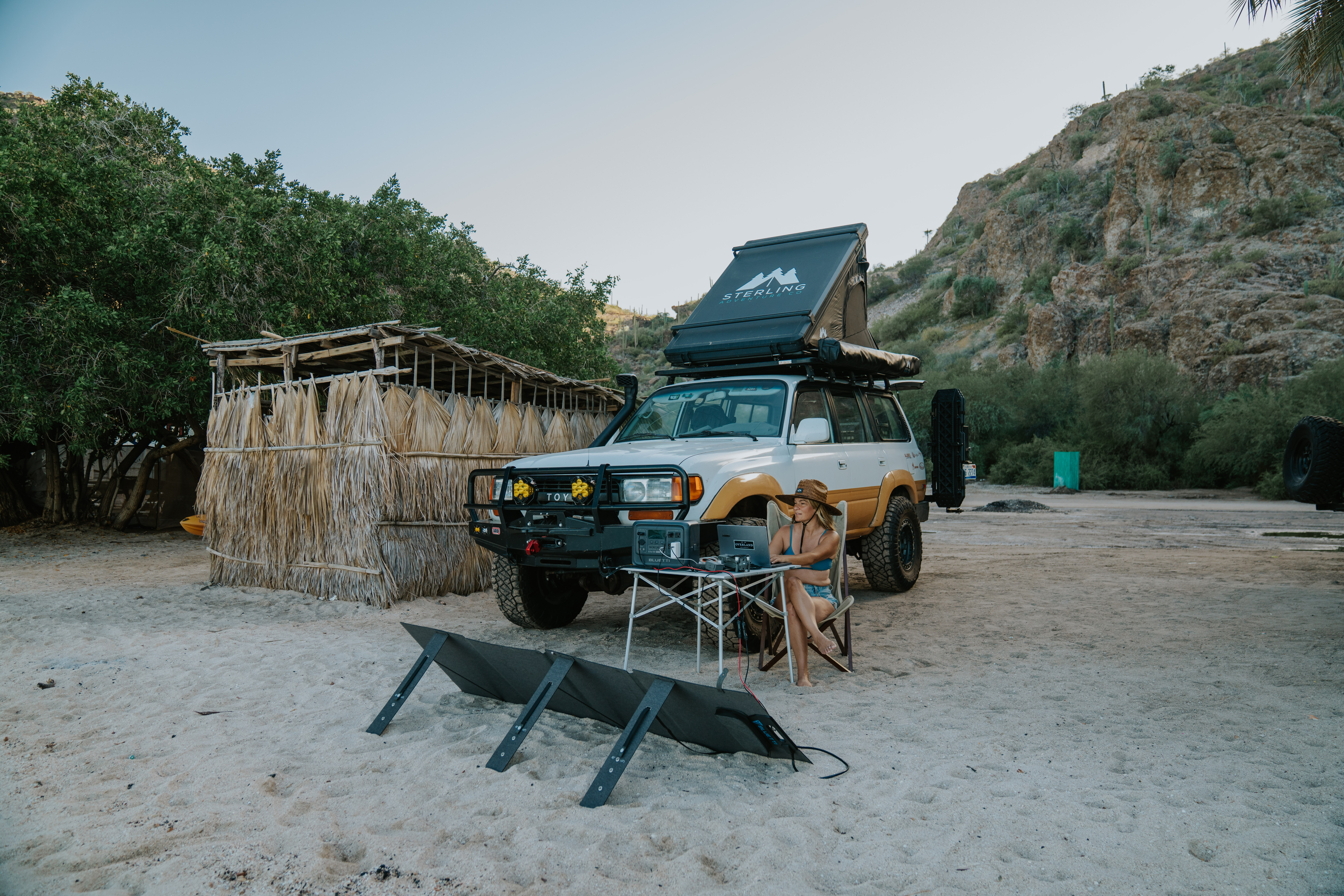
If the outage lasts for days and you do not have a yard for a gas generator, you can use solar power. The unit features an XT60 port that accepts up to 1,000W of solar input. You can set up portable folding solar panels on a small patio or balcony to recharge the battery during the day.
Ready for Right-Sized Power for a Right-Sized Home?
You do not need to rewire your house, pour concrete pads for loud generators, or spend five figures to protect your family during a blackout. Small homes require smart, efficient, and space-saving technology.
By equipping your kitchen with a targeted solution like the BLUETTI FridgePower, you secure your most critical asset automatically. You reclaim your floor space, eliminate the noise, and guarantee that when the grid goes down, your food stays perfectly chilled.

You May Also Like